
Resource Hub
Te Kōhanga Reo: Māori Language Immersion ECE in NZ
Published · Last updated · 7 min read

Contents
What is Te Kōhanga Reo?
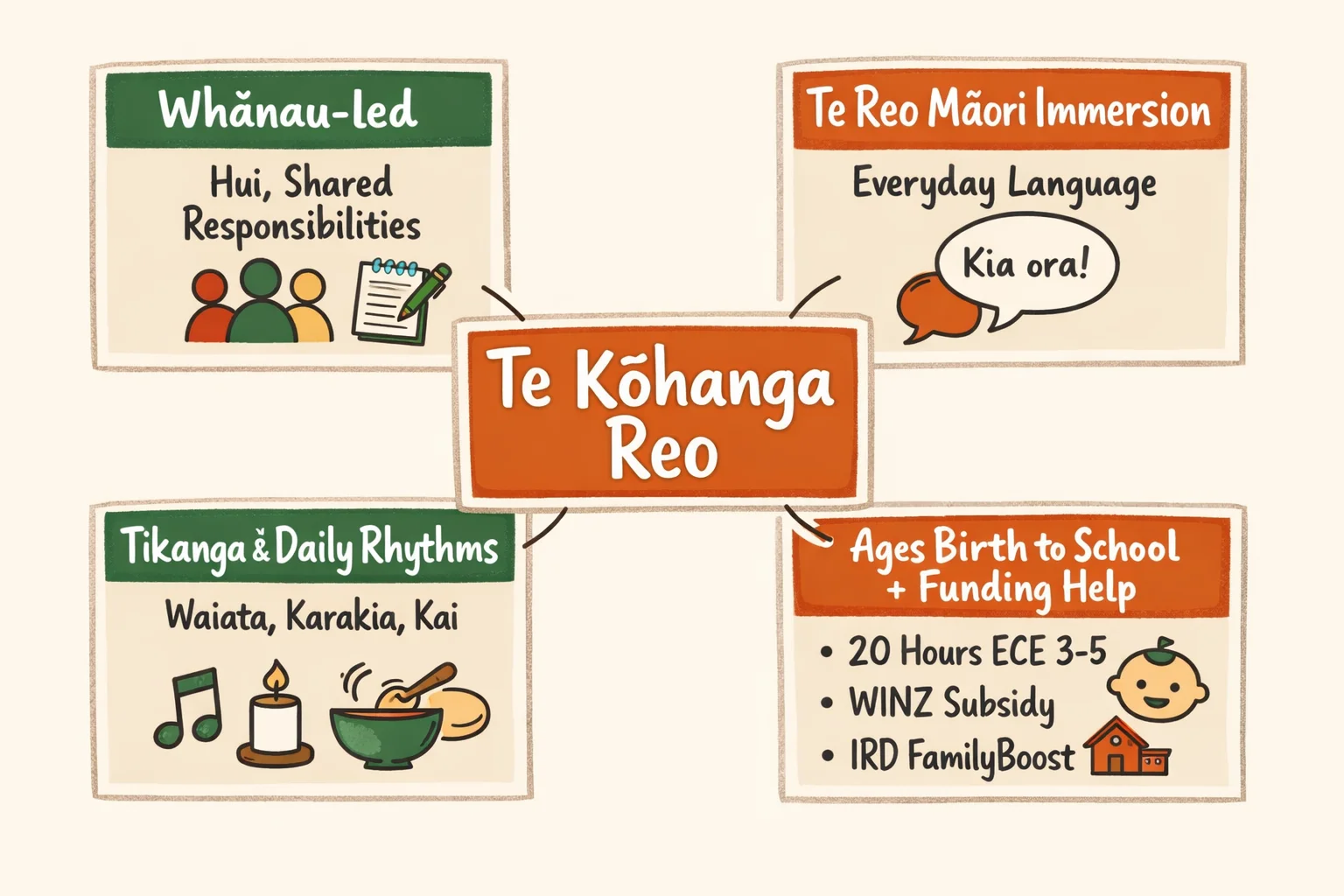
Te Kōhanga Reo is a whānau-led early childhood education service where tamariki are immersed in te reo Māori and tikanga Māori from pēpi age through to school. It is open to all families, and many kōhanga are licensed, which means they can access Ministry of Education funding like 20 Hours ECE (for eligible ages) and other subsidies.
Te Kōhanga Reo, in plain terms
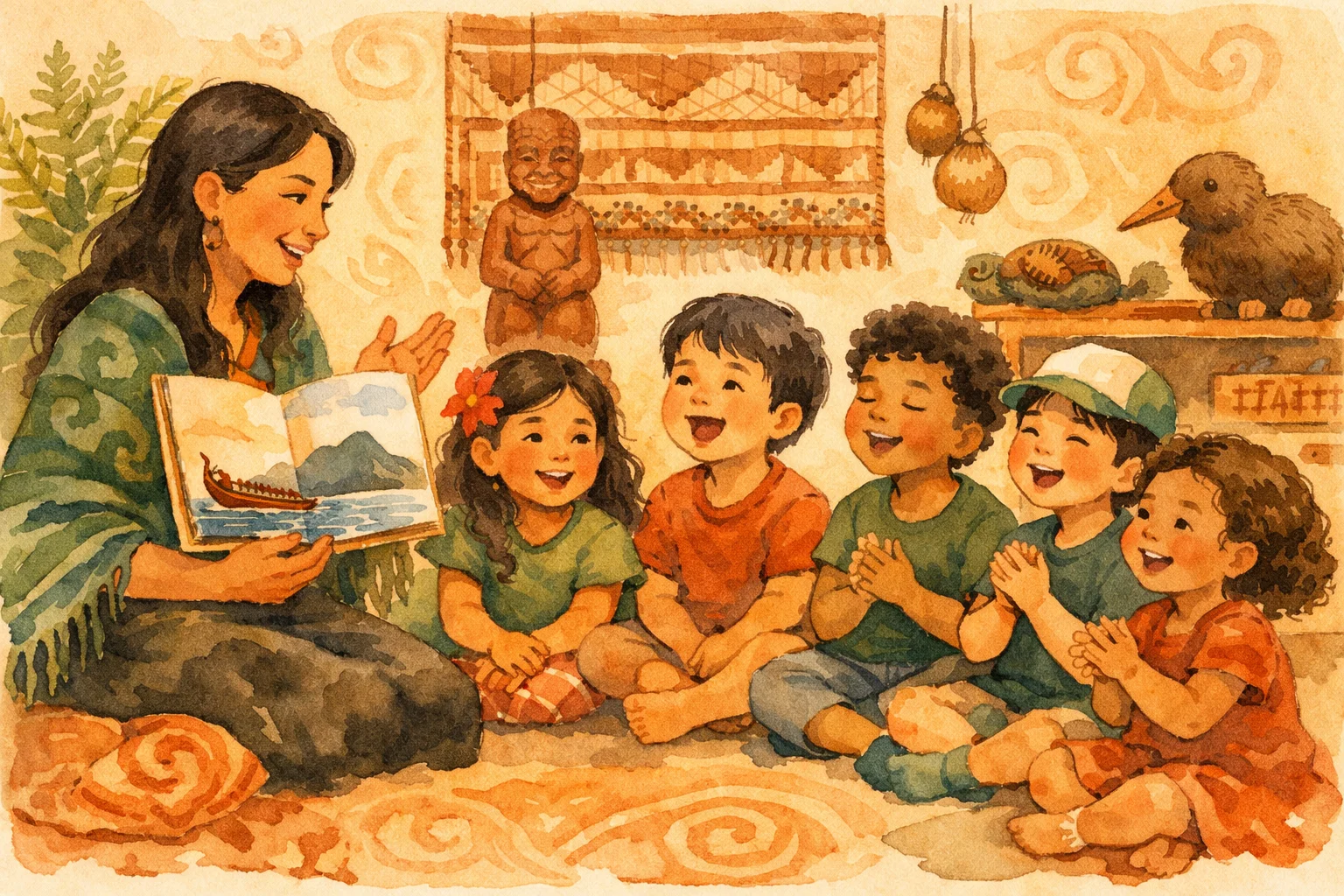
Te Kōhanga Reo (often shortened to "kōhanga") is a form of early childhood education where te reo Māori is the language of the day. Tamariki learn through play, relationships, waiata, stories, and routines, but the difference is that the language and cultural framework are kaupapa Māori.
Kōhanga are also whānau-led. The Ministry of Education describes the operation and administration of each kōhanga as the responsibility of kōhanga whānau, with the Trust Board recognised as kaitiaki (guardian) and steward of the kōhanga reo movement. (Source: MoE ECE Funding Handbook — 3-C-4 Te kōhanga reo)
A few words you’ll hear a lot
Why it exists: language revitalisation and whānau strength
Te Kōhanga Reo began in 1982, created as a direct response to the decline of te reo Māori. The founding mission is simple to say, and hard to do: put te reo Māori back into the mouths and ears of the youngest generation, in places where it is normal and expected.
For many whānau, kōhanga is also about reclaiming confidence. Parents and caregivers often learn alongside tamariki, picking up reo, tikanga, and ways of being together that feel different to a standard early learning centre.
How the whānau-led model works (and what it can mean for you)
Every kōhanga has its own rhythm, but the common thread is whānau responsibility. In many kōhanga, whānau contribute time in the programme, help with kai, cleaning, fundraising, maintenance, admin, or governance. Some kōhanga have a roster; others have set roles.
This is worth thinking about early. For some families, it is exactly what they want: a community you belong to, not a service you buy. For others, shift work, new babies, or no local support can make the time commitment hard.
- What does whānau involvement look like here week-to-week?
- Are there minimum participation expectations (for example, cleaning days or hui)?
- Who makes decisions about the programme, spending, and policies?
- How do new families get supported, especially if you’re learning te reo Māori?
Age range: pēpi to school entry
Most kōhanga welcome tamariki from birth through to school entry (often described as 0–6 years). You’ll usually see mixed-age play, with older tamariki learning care and leadership, and younger tamariki soaking up the language through everyday repetition.
What a typical day can look like
You’ll still see the familiar ECE foundations: free play, outdoor time, messy play, books, puzzles, kai, sleep for the little ones. What can feel different is the shape of the day and the shared rituals.
- A welcome and settling-in, often with karakia and a quick kōrero about the day
- Lots of waiata and movement (songs are a huge part of language learning)
- Play-based learning where kaiako model te reo Māori during routines (toileting, washing hands, tidying)
- Shared kai, with tikanga around food and caring for others
- Outdoor play and local outings when whānau ratios allow
- A closing karakia or waiata
Ask about attendance expectations
What tamariki can gain from immersion
Parents usually talk about the benefits in two layers: the language itself, and everything that comes with it.
- Te reo Māori as a living language: hearing and using reo every day builds real confidence, not just a few phrases.
- Strong identity and belonging: tamariki are surrounded by tikanga, whakapapa connections, and community relationships.
- Cognitive benefits linked to bilingualism: many studies on bilingual children show strengths in attention control and switching between tasks. Outcomes depend on quality and consistency of exposure, and support at home.
- Whānau learning: many adults pick up language and cultural confidence alongside their tamariki, especially when kōhanga supports whānau reo learning.
If you’re not a speaker, don’t assume you’ll "ruin it" at home. Plenty of whānau start as learners. What helps is a plan that feels doable: a few routines in reo, a playlist of waiata, labels around the house, or a regular kōrero time with someone who is confident.
Is Te Kōhanga Reo only for Māori families?
No. Te Kōhanga Reo is part of Māori language revitalisation, so it’s grounded in kaupapa Māori, but kōhanga are generally open to any family that will support the kaupapa respectfully.
If you’re not Māori, it’s normal to feel unsure about whether you ‘belong’. The best thing to do is visit, listen, and ask what support looks like in that kōhanga. Some kōhanga will have a strong expectation that whānau are present and contributing; others may be set up differently.
Costs, subsidies, and what to ask about fees
Fees vary a lot between kōhanga. Some charge low weekly contributions; others have higher fees because of rent, staffing, kai, or transport. The cleanest way to compare is to ask for a written breakdown of what is included.
| Type of help | Who it’s for | What it can cover | Where to check |
|---|---|---|---|
| 20 Hours ECE | Most children aged 3, 4, or 5 (if the kōhanga offers it) | Up to 20 hours/week (max 6 hours/day). You cannot be charged fees for those 20 hours. | [MoE 20 Hours ECE info](https://www.education.govt.nz/early-childhood/funding-and-data/20-hours-ece-for-ece-services) |
| Work and Income Childcare Subsidy (MSD) | Eligible families based on income and circumstances | Can be used instead of 20 Hours ECE, or combined if your subsidy is for more than 20 hours/week. | [Work and Income Childcare Subsidy](https://www.workandincome.govt.nz/products/a-z-benefits/childcare-subsidy.html) |
| FamilyBoost (IRD) | Eligible households (income test and other criteria) | Refund based on early childhood education fees charged by a licensed provider. IRD guidance explicitly includes ECE and Kōhanga Reo providers. | [IRD FamilyBoost](https://www.ird.govt.nz/familyboost) |
Also ask about the difference between a donation and an optional charge. The Ministry says donations are voluntary and cannot be required or described as fees. Optional charges can apply if you agree to them in the enrolment agreement. (Source: MoE 20 Hours ECE info)
Kaiako, qualifications, and ratios (what ‘quality’ can look like)
Kōhanga staffing looks different across the motu. Some kōhanga have more qualified kaiako on the floor; others rely more on whānau contribution alongside kaiako, especially in smaller communities.
One place parents can start is the Ministry of Education’s funding handbook section for kōhanga reo. It lists a pathway for kōhanga to meet a "quality funding" requirement, including ratios of 1:4 for under-2s and 1:6 for age 2+, and it names recognised kōhanga qualifications (Whakapakari Tino Rangatiratanga Diploma / Te Paetahi Degree). (Source: MoE — 3-C-4 Te kōhanga reo)
- How many kaiako are with the tamariki at different times of the day?
- What reo support is there for whānau who are learning?
- What training or qualifications do kaiako and whānau hold (and what is the plan for ongoing training)?
- How do they support pēpi and toddlers (sleep, feeding, settling) in te reo Māori?
Kōhanga Reo vs Puna Reo vs Reo Rua: what’s the difference?
Parents often hear these terms used loosely, but they are not the same thing. The labels can also be used differently by different organisations, so treat this as a starting point and ask each service what their language policy is in practice.
| Option | What it usually means | Good fit if… |
|---|---|---|
| Te Kōhanga Reo | Whānau-led kaupapa Māori early learning, with a strong expectation of te reo Māori immersion as the language of daily life. | You want immersion and are willing to support the kaupapa, including whānau involvement. |
| Puna Reo | A Māori immersion or Māori-medium early learning programme that may sit within a licensed centre structure (not always whānau-led in the same way as kōhanga). | You want strong reo, but you also want a more typical centre operating model. |
| Reo Rua (bilingual) | A bilingual programme using both English and te reo Māori. The percentage of Māori used varies a lot. | You want a mix, or you’re starting out and want a gentler step into reo learning. |
How to find and enrol in a kōhanga reo
Start with our care type page and search tools, then confirm details directly with the kōhanga.
- Browse Te Kōhanga Reo listings and use Search to filter by location.
- Book a visit (take a list of questions, and bring your tamariki if you can).
- Ask about enrolment timing, waitlists, start dates, and any whānau expectations.
- Confirm what’s included in fees and what support is available for whānau reo learning.
- If your child is 3–5, ask whether they offer 20 Hours ECE and how they apply it to fees.
Paperwork tip
The current picture (and why kōhanga can be hard to access)
Many areas have kōhanga with long waitlists, limited hours, or fewer spaces for pēpi. The reasons are practical: recruiting fluent kaiako, funding pressures, and the time it takes to sustain a whānau-led model when families are stretched.
If there isn’t a kōhanga near you (or it’s not workable right now), consider a stepping-stone. Some families start in a bilingual Reo Rua programme, then move to kōhanga later. Others do kōhanga part-time and use another service for the extra hours.
FAQ
Do you need to speak te reo Māori at home to enrol?
No. Many whānau start as learners. Ask each kōhanga what support they offer for whānau reo learning, and what they expect from home (for example, simple routines, waiata, or consistent attendance).
Is Te Kōhanga Reo licensed and regulated?
Many kōhanga are licensed early learning services. Licensed kōhanga reo are eligible for Ministry of Education funding (including 20 Hours ECE where offered). You can also look for ERO review information and licence details when you’re comparing options.
How much does kōhanga cost?
It varies by kōhanga and what is included (kai, transport, nappies, trips). If your child is 3–5 and the kōhanga offers 20 Hours ECE, those hours cannot be charged as fees. Ask for a written breakdown so you can compare fairly.
Can I get FamilyBoost or other help with fees?
Some families may be eligible for Work and Income Childcare Subsidy and/or IRD’s FamilyBoost, depending on circumstances. Keep your invoices and enrolment paperwork, and check eligibility directly with Work and Income and IRD.
What should I look for when I visit a kōhanga?
Listen for how much te reo Māori is used in everyday moments, not just during mat time. Notice how pēpi and toddlers are supported, how whānau are welcomed, and whether the daily routines feel calm and well-run.
If you’re comparing options, our main guide to childcare types can help you put kōhanga alongside kindergartens, daycares, Playcentre, and home-based care: Types of childcare in NZ: a complete guide.
Find Te Kōhanga Reo near you
Use The Parent Circle to browse kōhanga reo and compare what’s available in your area.
Search kōhanga reoVideo
Related guides
Childcare for Twins and Multiples in New Zealand
A practical guide to finding childcare for twins and multiples, with questions on places, routines, staffing and support.
Age-by-Age Guide: When Is the Best Time to Start Childcare?
There is no universal best age to start childcare. This NZ guide helps you weigh your child, care quality and family timing at every stage.
Bilingual Children and ECE: Language Immersion Benefits in New Zealand
Does bilingual ECE in NZ actually help your child? Yes. Here's what the research shows about language immersion, cognitive benefits, and how Te Whāriki supports every home language.
Casual and Drop-In Childcare in NZ: Your Complete Guide
Casual and drop-in childcare lets NZ families book sessions without a fixed enrolment. This guide explains where to find it, what it costs, how WINZ subsidies apply, and what to look for in a licensed provider.
Find childcare near you
Search and compare providers by suburb, care type, cost, and availability.