
Resource Hub
Steiner/Waldorf ECE in NZ: A Parent's Guide
Published · Last updated · 7 min read
What is Steiner/Waldorf ECE in New Zealand?
Steiner/Waldorf early childhood services usually centre the day on predictable rhythms, imaginative play, practical activities and warm relationships. In New Zealand, a licensed Steiner service still works within Te Whāriki and must meet the same regulatory standards as other licensed early learning services. The right question is not whether the label sounds appealing. It is whether the programme, teachers, hours and culture suit your child and whānau.
What parents usually notice first
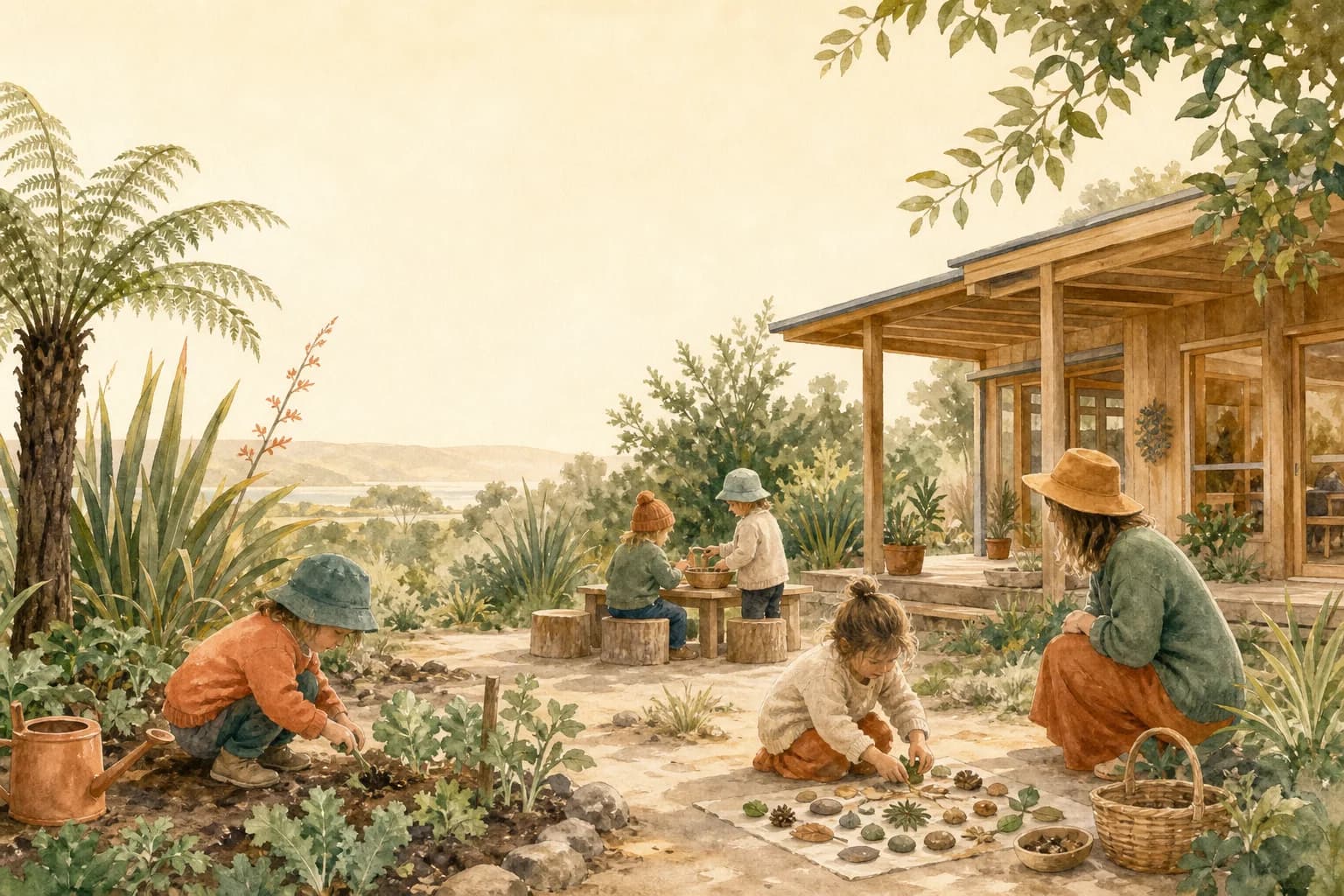
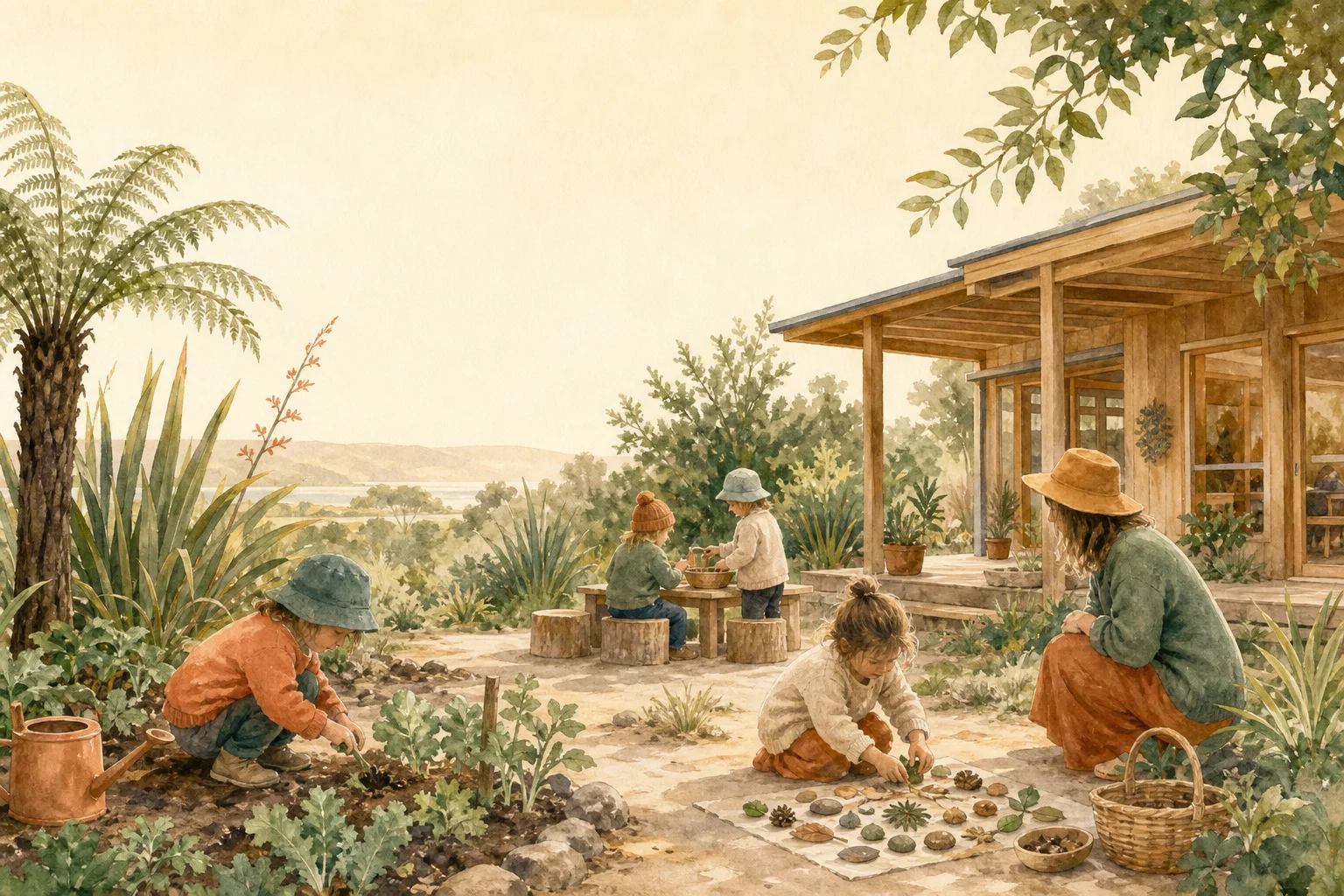
A visit to a Steiner/Waldorf kindergarten can feel noticeably different from a busy, toy-heavy centre. You may see natural materials, a home-like room, bread being made, gardening, songs, stories, simple crafts and long stretches of self-directed play. Teachers often use a repeated daily or weekly rhythm so children know what comes next.
Those visible details are not a quality rating by themselves. A calm room can still have weak communication, and an attractive philosophy can still be a poor practical fit for a family. Use the visit to watch how kaiako respond when a child needs help, how children are included, and whether your questions receive plain answers.
Video
The approach in plain English
Rudolf Steiner, also called Waldorf, is an educational tradition with a particular view of early childhood. In the preschool years, services commonly give plenty of time to imitation, movement, hands-on work, storytelling and make-believe rather than formal academic instruction. A teacher might prepare food, mend something or sweep alongside the children, then invite them into the activity.
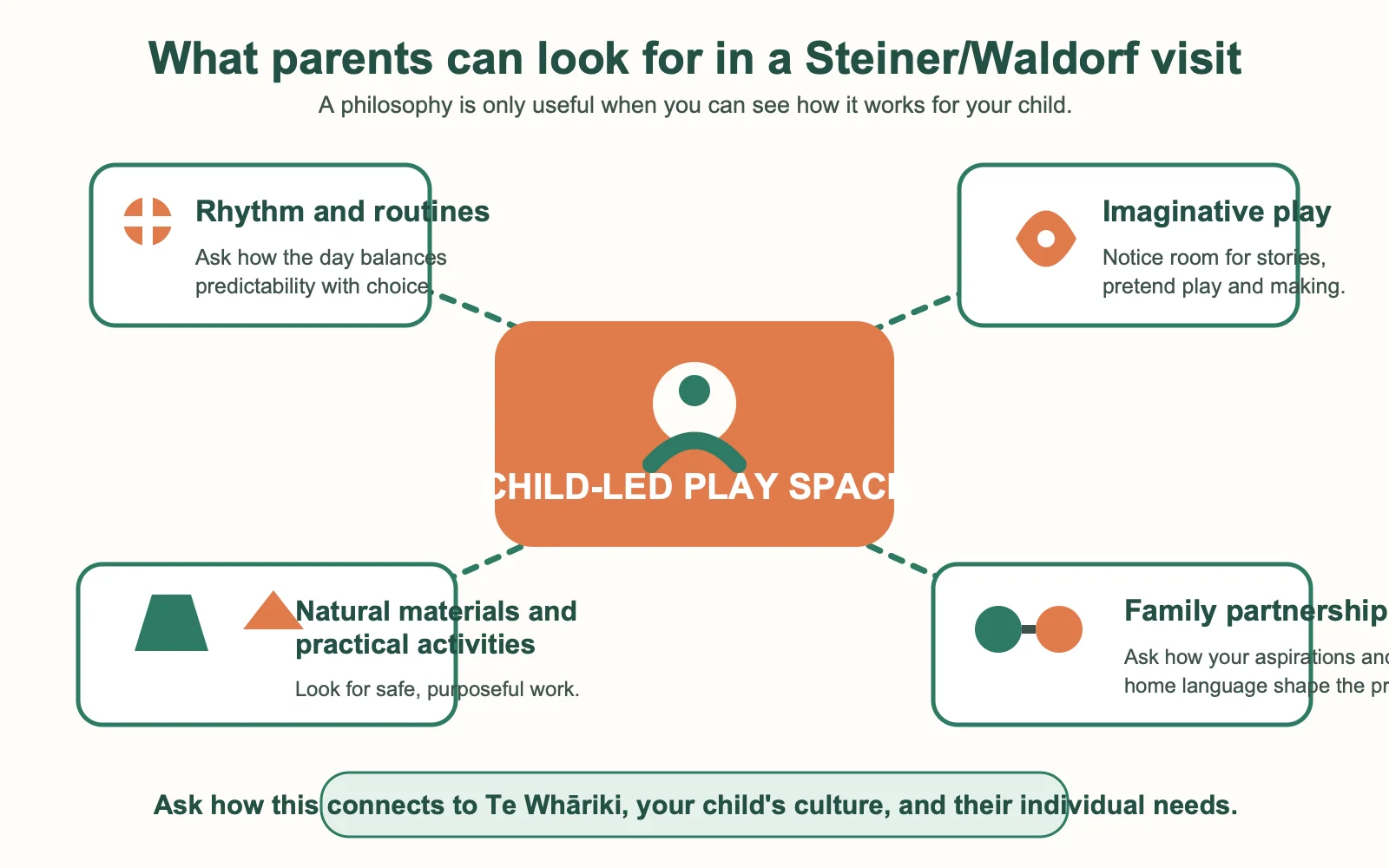
Rhythm matters. Rather than changing activities constantly, a service may repeat a familiar sequence for arrival, shared food, play, tidy-up, story and outdoor time. For many children, that predictability feels settling. For others, especially children who need a great deal of novelty or a very explicit learning plan, it may be less appealing. There is no universal winner here. Children are people, not a philosophy-matching exercise.
How it fits with Te Whāriki
Te Whāriki is Aotearoa New Zealand's national early childhood curriculum. It sets four principles, including holistic development, family and community, and responsive relationships, alongside five learning strands. It is a framework for each service to weave into its own local curriculum, not a single lesson plan copied from one centre to another.
That is why a licensed Steiner service can have its own character while still being accountable to Te Whāriki. The Ministry says Te Whāriki provides the basis and context for curriculum requirements for licensed early learning services. ERO reports on individual Steiner services describe programmes that combine the philosophy with Te Whāriki. When you visit, ask the service to show how your child's culture, home language, interests and whānau aspirations are reflected in that local curriculum. A good answer should be specific, not a brochure sentence.
What a good visit can tell you
Start with the basics. The Ministry recommends visiting services, checking opening hours and reading their ERO reports. If you need full-day care, school-holiday care or flexible drop-off times, ask before you become emotionally attached to the room. Services set their own hours, ages, meals and fee structures within the licensing rules.
Then watch the ordinary moments. Do children have room to choose and persist with play? Does a teacher make time for a child who is upset? Are there warm, back-and-forth conversations rather than only instructions? Can you picture your child at morning drop-off? A centre does not need to look like your home, but it should feel safe, respectful and open to your family.
Questions worth asking the teacher
- How does your daily rhythm change for infants, toddlers and older preschoolers?
- How do you record and share my child's learning and progress with us?
- How are te reo Māori, local stories and our family's language or culture present in the programme?
- What happens when a child does not want to join a group activity or finds the routine difficult?
- How much outdoor time do children usually have, and what happens in wet weather?
- How do you support children with additional learning needs or work with outside specialists?
- What are the current teacher qualifications, staff turnover and adult-to-child arrangements?
- Can you show us your latest ERO report and explain any next steps?
Pay attention to how the teacher answers, not merely whether the answer sounds polished. You want clear examples from this service: what a settling-in week looks like, how they handle a hard drop-off, how they communicate when something changes. If a centre says it values family partnership, it should be able to describe what partnership looks like on a wet Tuesday morning.
Steiner, Montessori, Reggio and play-based ECE are not interchangeable
| Approach | A parent may notice | Useful question |
|---|---|---|
| Steiner/Waldorf | Rhythm, imitation, storytelling, natural materials and practical activity | How does this routine adapt to my child's needs and our whānau? |
| Montessori | Purposeful materials, prepared spaces and growing independence | How much choice does my child have, and how are skills introduced? |
| Reggio-inspired | Projects, documentation and children’s ideas developed over time | How are children's questions carried into the programme? |
| Play-based ECE | Open-ended play shaped by a local curriculum | How do kaiako extend play and show learning over time? |
Most New Zealand services borrow ideas rather than follow one model with absolute purity. The important comparison is between the real centres available to you, not four idealised websites. Read our guide to Montessori childcare in NZ, the Reggio-inspired approach, and the broader ECE philosophies guide before you visit. Then put your attention back on your own tamaiti.
When Steiner/Waldorf may suit your family
It may suit a child who enjoys pretend play, songs, stories, outdoor exploration and an unhurried, familiar rhythm. Some whānau also like practical activities such as gardening, baking and caring for the environment because they give children a real role in the day. A service with strong relationships and good transition support can be particularly reassuring for a child who takes time to settle.
It may be less convenient when you need long or highly flexible hours, when the local option has a long waitlist, or when the programme does not respond well to your child's communication, sensory, cultural or learning needs. Do not treat any one point as a deal-breaker without asking. A capable service should be able to discuss accommodations, referral pathways and what it can realistically provide.
How to find a Steiner/Waldorf option near you
Start with the Ministry's early-learning information and local service listings, then search the ERO site for the specific service you are considering. ERO reports are not a substitute for a visit, but they give you a second, independent view of curriculum, relationships and regulatory matters. Check the date, read the whole report and ask the centre about any stated next steps.
Availability is often the practical constraint. Ask about age ranges, the waiting list, the minimum days, 20 Hours ECE eligibility, fees beyond funded hours, meals and holiday operation. Our guide to childcare waitlists can help you plan a backup option while you wait.
The decision is allowed to be practical
A thoughtful approach to early childhood learning is worth exploring. So are your commute, your budget, your child's response and whether staff listen well. Visit more than once if you can. Bring the questions that matter to your family, read the ERO report, and give yourself permission to choose a centre that works in real life.
If you are weighing several local options, use The Parent Circle to find childcare near you and compare centres side by side.
A simple way to make the final call
After each visit, write down what you actually saw before you compare notes with a partner or family member. Try four prompts: How did the children seem to feel? How did adults respond? Could our family manage the timetable and cost? What questions are still unanswered? This small pause is useful because the first impression of a beautiful room, or a difficult parking situation, can otherwise dominate the whole decision.
If your child is old enough to visit with you, notice their response without turning it into a test. Some children hang back in a new place and warm up later. Others head straight for the sandpit. Neither response predicts whether the service will work, but it gives you a useful starting point for a settling-in conversation. Ask whether you can make a shorter second visit at the time of day your child would normally attend.
Finally, tell the centre what your family needs. That could be a familiar word in another language, a gradual start, a comfort item, food requirements or a clear handover plan. A good service will not promise what it cannot deliver. It will explain what it can do, who will be responsible and when you will review how things are going. That straightforwardness is more valuable than a perfect sales pitch.
Frequently asked questions
Is Steiner/Waldorf ECE recognised in New Zealand?
Yes. Rudolf Steiner is one of the educational approaches used by some New Zealand early learning services. A licensed service must meet the Ministry's requirements and work within the national early childhood curriculum framework, Te Whāriki.
Does Steiner/Waldorf ECE follow Te Whāriki?
Licensed services work within Te Whāriki. Their local programme may have a Steiner character, but it should still show how Te Whāriki, children’s identities, languages, cultures and whānau aspirations are reflected in practice.
Are Steiner kindergartens better than other childcare options?
No approach is automatically better. Quality depends on responsive teachers, safety, communication, inclusion, the individual service and whether it suits your child and family.
What should I check before enrolling?
Visit the service, read its current ERO report, ask about hours, fees, availability and settling-in, and discuss how the programme supports your child's culture, language and any additional needs.
Can I use 20 Hours ECE at a Steiner service?
Ask the individual licensed service about its enrolment and funding arrangements. Eligibility and charges beyond funded hours depend on the service and your child's circumstances.
Find the right early learning service
Compare local options, check practical details and build a shortlist that fits your whānau.
Search childcareRelated guides
Childcare During Family Transitions: A NZ Parent's Guide
A practical NZ guide to supporting your child through separation, moving, grief and other family changes at childcare.
Childcare for Twins and Multiples in New Zealand
A practical guide to finding childcare for twins and multiples, with questions on places, routines, staffing and support.
Reggio Emilia in NZ: Understanding the Reggio-Inspired Approach to ECE
A practical NZ guide to Reggio-inspired early learning, from inquiry and documentation to questions for your centre visit.
Montessori Childcare in NZ: What to Expect and How to Choose
A practical guide to Montessori early learning in NZ, from prepared environments and Te Whariki to questions for your centre visit.
Find childcare near you
Search and compare providers by suburb, care type, cost, and availability.