
Resource Hub
Rural Childcare in NZ: Options for Families Outside Major Cities
Published · Last updated · 7 min read

Contents
What childcare options do rural NZ families actually have?
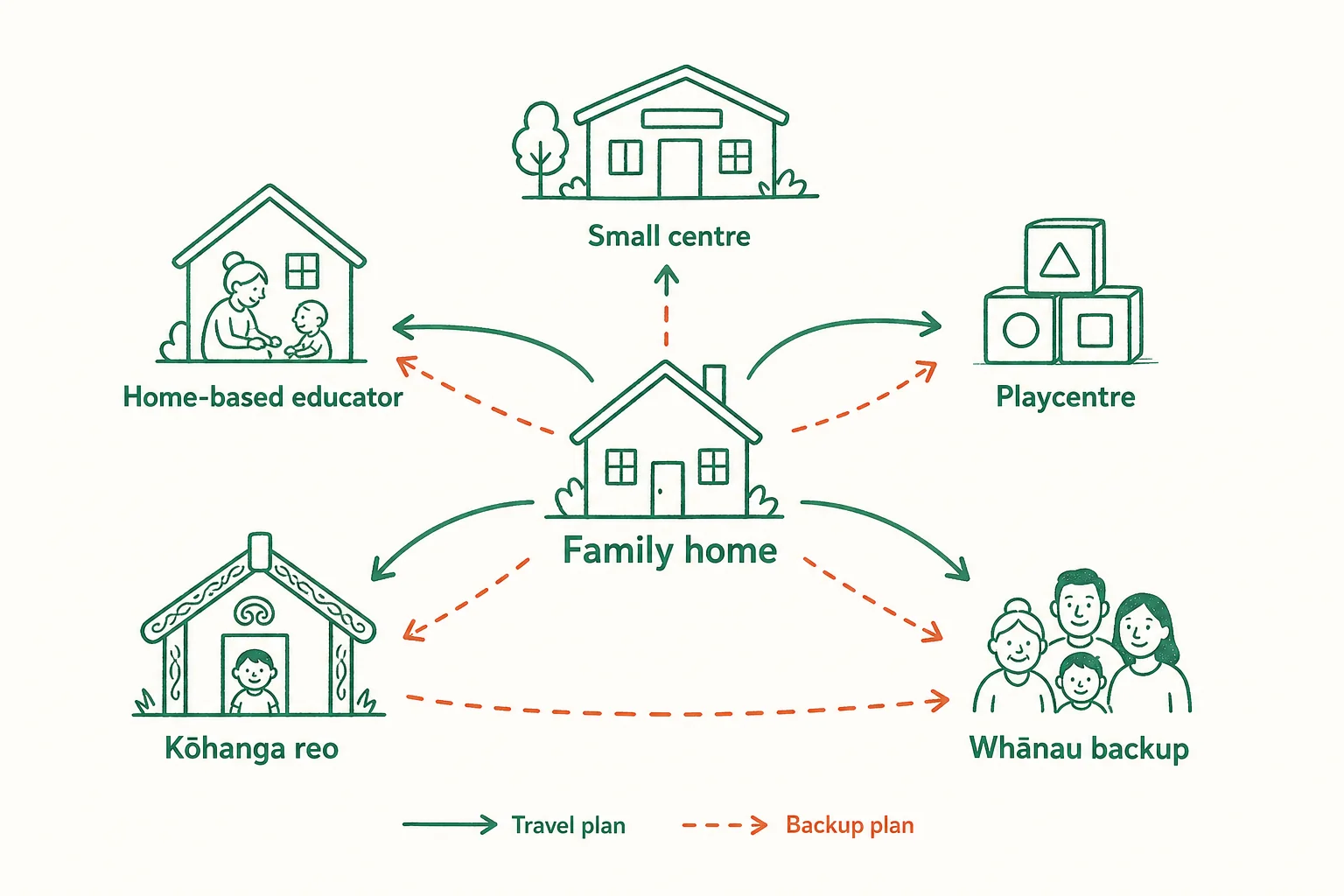
Most rural families use a mix of small education and care centres, home-based educators, Playcentre, kindergarten, Te Kōhanga Reo, Puna Reo, playgroups, and whānau backup. The trick is not finding the perfect single option. It is building a care plan that survives distance, weather, seasonal work, and the days when the only centre with space is 25 minutes away.
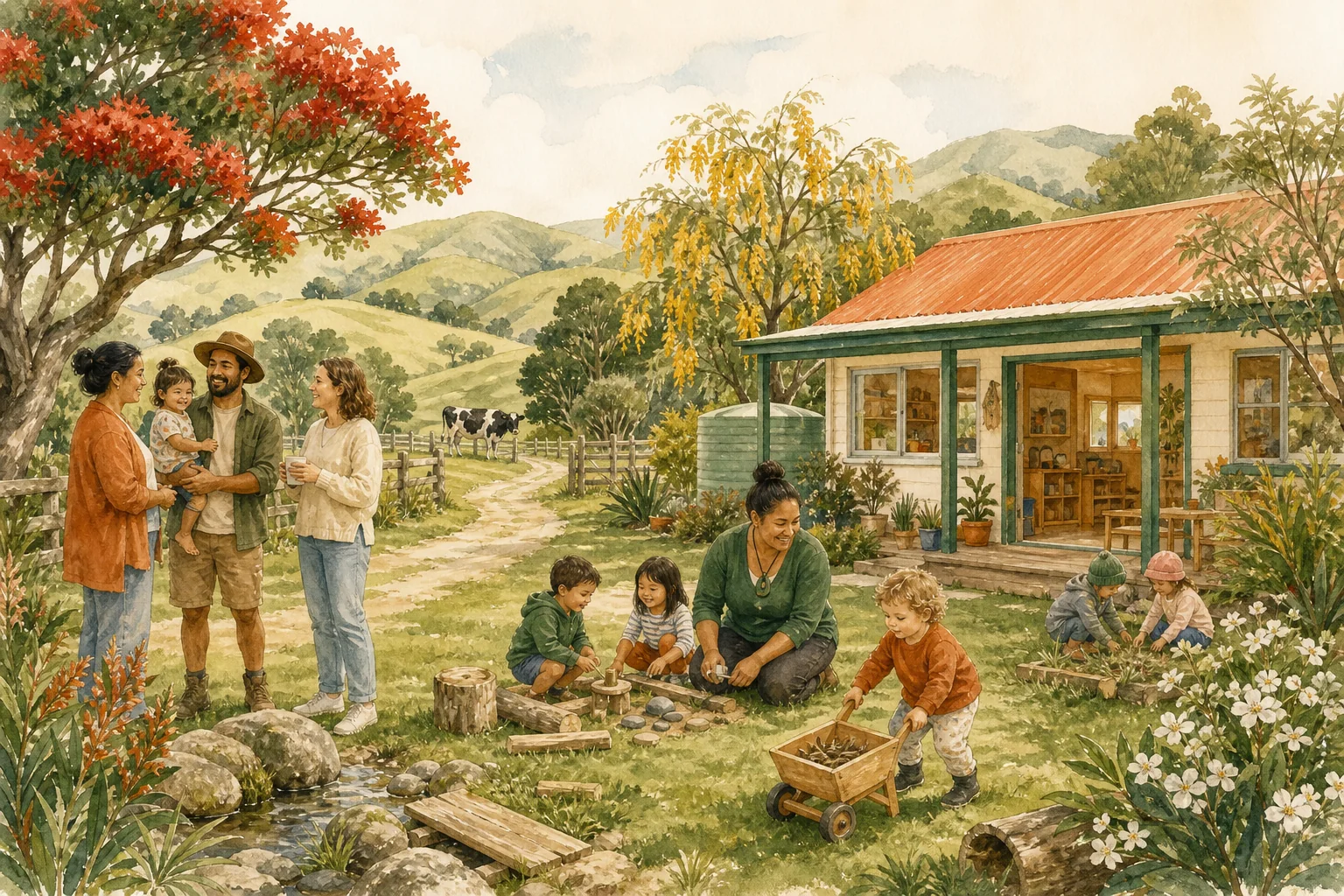
Rural childcare is a logistics problem first
In a big city, childcare stress usually means waitlists, fees, and traffic. Rural childcare adds a different layer: distance. You might have one licensed service nearby, a Playcentre that runs on certain mornings, a home-based educator with two under-2 spots, and a grandparent who can help unless it is calving, lambing, harvest, or school holidays.
That does not mean rural families have no options. The Parent Circle database has 4,394+ active ECE providers across 1,026 suburbs, including 497 active providers marked as rural settlement or rural other. Those rural listings add up to more than 17,300 licensed places, including about 5,100 under-2 places. The supply is real. It is just spread thinly.
The rural rule of thumb
Why childcare feels harder outside the cities
Rural childcare is rarely one problem. It is a stack of small frictions. Fewer services means fewer backup choices. Smaller rolls can make centres more personal, but also more fragile if staffing changes. Under-2 places can disappear quickly because babies need more staff time and smaller group sizes.
- Longer travel: a centre 18km away may be fine in February and miserable in July rain.
- Limited hours: Playcentre and small community services may not cover a full workday.
- Thin backup options: when your usual educator is sick, there may not be another licensed place nearby.
- Seasonal pressure: farming, horticulture, and tourism work can change family routines fast.
- Mixed-age care: often lovely for siblings, but parents should still ask how babies, toddlers, and four-year-olds each get the right support.
This is why rural parents need to think in combinations. Two mornings at Playcentre, two days with a home-based educator, and one grandparent day may be more realistic than chasing a five-day centre place that does not exist nearby.
The main rural childcare options
| Option | Best for | Watch for |
|---|---|---|
| Small education and care centre | Full-day care, siblings, regular work hours | Distance, teacher turnover, waitlists for under-2s |
| Home-based ECE | Flexible hours, babies, small groups, rural roads | Relief care, educator fit, agency oversight |
| Playcentre | Community, parent involvement, babies to school age | You usually stay and participate, so it is not workday cover |
| Kindergarten | 3 to 5 year olds, teacher-led sessions, school preparation | Sessional hours may not match work hours |
| Te Kōhanga Reo or Puna Reo | Whānau-led kaupapa Māori or bilingual pathways | Availability varies sharply by rohe |
| Playgroup or whānau care | Social connection, backup, informal support | Not the same as licensed childcare for work cover or subsidies |
In The Parent Circle's rural provider data, education and care services are the largest group, followed closely by Te Kōhanga Reo and Playcentre. That matters. Rural childcare is not just smaller versions of city daycare. It often leans more heavily on community, whānau participation, and mixed-age relationships.
Home-based care can be the rural lifeline
Licensed home-based ECE is often the option that makes rural life workable. Your child is cared for in an educator's home, usually through a licensed agency. A visiting teacher or coordinator supports and monitors the educator, although they are not sitting in the home all day.
The legal limits are important. Home-based ECE can have up to four children under six per educator, with no more than two under-2s at the same time unless sibling rules apply. For parents, that means baby and toddler places can be genuinely scarce. If you are pregnant or moving with an infant, ask about under-2 availability early.
- Ask who provides relief care if the educator is sick or away.
- Check how often the visiting teacher comes and how learning is documented.
- Ask whether school-aged children are present before or after school.
- Look for safe sleep, fencing, animals, water hazards, and car seat routines.
- Read the agency's latest ERO report, not just the educator profile.
Good fit, not just close fit
Playcentre is strong where community is strong
Playcentre is a very NZ answer to rural childcare pressure. It is parent-led, community-based, and built around learning through play. Playcentre Aotearoa says it has 400+ centres nationwide, which makes it worth checking even in small towns where there are not many full-day services.
The catch is simple: Playcentre is usually not a drop-and-go workday solution. Parents and caregivers participate. For families with a baby at home, part-time work, flexible farm schedules, or a need to meet other local whānau, that can be exactly the point.
- Use it for social connection if your child is otherwise mostly at home.
- Ask about session days, parent education requirements, and holiday closures.
- Consider it alongside home-based care if you need both community and coverage.
- If you are new to a district, treat Playcentre as a local knowledge hub. Parents there often know which centres have spaces before websites do.
Kōhanga reo and Puna Reo may be the best local fit
For some rural whānau, the most meaningful early learning option is Te Kōhanga Reo, Puna Reo, or another Māori language pathway. These services can offer language, identity, tikanga, and whakapapa connections that a general centre cannot replicate.
Availability depends heavily on rohe. The Parent Circle's rural-ish listings include 139 Te Kōhanga Reo and 8 Puna Reo entries, so it is worth searching by care type as well as suburb. If you are open to a kaupapa Māori or bilingual setting, ring directly. Some services operate through whānau networks more than polished marketing.
Same curriculum, different expression
Costs, subsidies, and the paperwork trap
Rural care is not automatically cheaper. Some small centres keep fees modest because property costs are lower. Others charge more because staffing a small roll is expensive. Home-based care can be cost-effective, but fees vary by agency, educator, hours, meals, nappies, and transport expectations.
- 20 Hours ECE can reduce fees for eligible 3 to 5 year olds at participating services.
- Work and Income Childcare Subsidy is income-tested. Your provider has to complete part of the application paperwork.
- FamilyBoost is claimed through IRD, usually quarterly, and depends on your household income and childcare costs.
- Some centres offer sibling discounts, but do not assume. Ask for the full weekly invoice before you decide.
- If you combine care types, check which invoices and statements you need for subsidy or FamilyBoost claims.
The boring admin matters. A rural care plan with three providers can fall apart if nobody is clear on invoices, subsidy forms, absence rules, or who gets paid during holidays. Before you enrol, ask each provider for a written fee schedule and cancellation policy.
A practical plan for rural parents
Do not start with the question, "What is the best childcare near me?" Start with, "What weekly rhythm can our family actually maintain?" That one change saves a lot of disappointment.
- Map your real driving loop: home, work, school, grandparents, supermarket, and the nearest service.
- Search by region and suburb on The Parent Circle, then widen the radius one step at a time.
- Ring services directly. Rural vacancies can change before websites are updated.
- Ask about under-2 places, holiday closures, relief staffing, and whether hours can change seasonally.
- Read the latest ERO review for the centre or home-based agency.
- Build backup before you need it: neighbour swap, whānau roster, occasional playgroup, or one emergency annual leave plan.
- If you are relocating, read our guide to finding childcare when moving within NZ before you lock in a house.
Questions to ask before you enrol
- What happens if the only qualified teacher or home-based educator is away?
- How many children under two can you take, and is a space genuinely available?
- Do you close during school holidays, harvest periods, or teacher-only days?
- Can hours change during seasonal work peaks, or is the booking fixed?
- How do you communicate if roads flood, buses stop, or weather makes travel unsafe?
- What does a normal day look like for babies, toddlers, and older children?
- How do you include te reo Māori, local stories, nature, and whānau in the programme?
If a provider gets defensive about practical questions, pay attention. Rural parents are not being difficult when they ask about relief care, flooded roads, animals, or a 6:30am start during calving. They are describing real life.
Rural childcare in NZ: FAQ
Is home-based childcare licensed in New Zealand?
It can be. Licensed home-based ECE operates through a licensed service or agency, with educators caring for children in a home and visiting teachers or coordinators providing oversight. Always check that the service is licensed and read its ERO report.
How many children can a home-based educator care for?
Licensed home-based ECE generally allows up to four children under six per educator, with no more than two under-2s at the same time unless specific sibling rules apply. This is why infant places can be tight in rural areas.
Does 20 Hours ECE apply in rural areas?
Yes, if your child is eligible and the service participates. It is for 3 to 5 year olds and can apply across participating early learning services, not just city centres.
Is Playcentre a childcare option for working parents?
Sometimes, but it is usually parent-led and caregiver-attended rather than full-day drop-off care. It can be excellent alongside home-based care, kindergarten, whānau care, or part-time work.
What should I do if there are no spaces nearby?
Widen your search radius, ask about future vacancies, join waitlists, check home-based agencies, contact Playcentre or playgroups for local knowledge, and build a temporary care plan with whānau or neighbours while you wait. If you are moving, start before you move.
Rural childcare asks more from parents. More phone calls. More driving maths. More backup planning. But the upside can be beautiful: smaller communities, strong whānau relationships, outdoor play, mixed-age friendships, and kaiako who know the local roads as well as the local children.
Find rural childcare near you
Search 4,394+ NZ ECE providers by suburb, region, care type, and age range.
Search providersRelated guides
Childcare for Every Family: Special Circumstances
A practical NZ guide to finding childcare around additional needs, shift work, single parenting, siblings and family change.
Your Child's First Illness from Daycare: What NZ Parents Need to Know
A calm NZ guide to the first daycare illness season: what is normal, when children need to stay home, when to call Healthline, and how working parents can plan for sick days.
The Childcare Settling-In Process: What NZ Centres Offer and What to Expect
A practical NZ guide to settling visits, key kaiako relationships, week-by-week transitions, and questions to ask before your child starts childcare.
Starting Childcare in NZ: A Complete Guide to Preparing Your Family
A practical NZ guide to preparing your child, yourself, and your daily routine for the first day, first week, and first month of childcare.
Find childcare near you
Search and compare providers by suburb, care type, cost, and availability.