
Resource Hub
The Childcare Settling-In Process: What NZ Centres Offer and What to Expect
Published · Last updated · 9 min read

Contents
What is the childcare settling-in process in NZ?
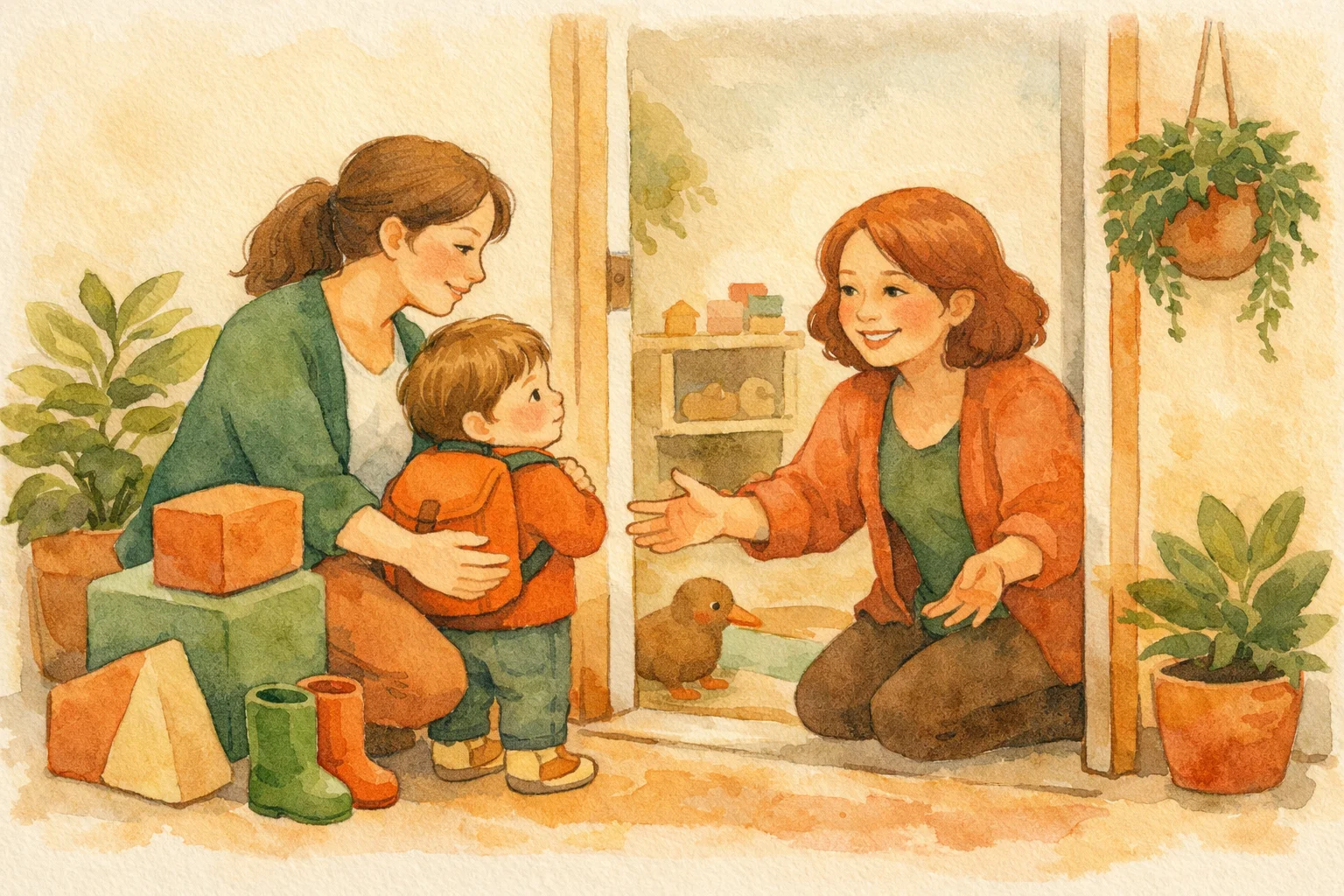
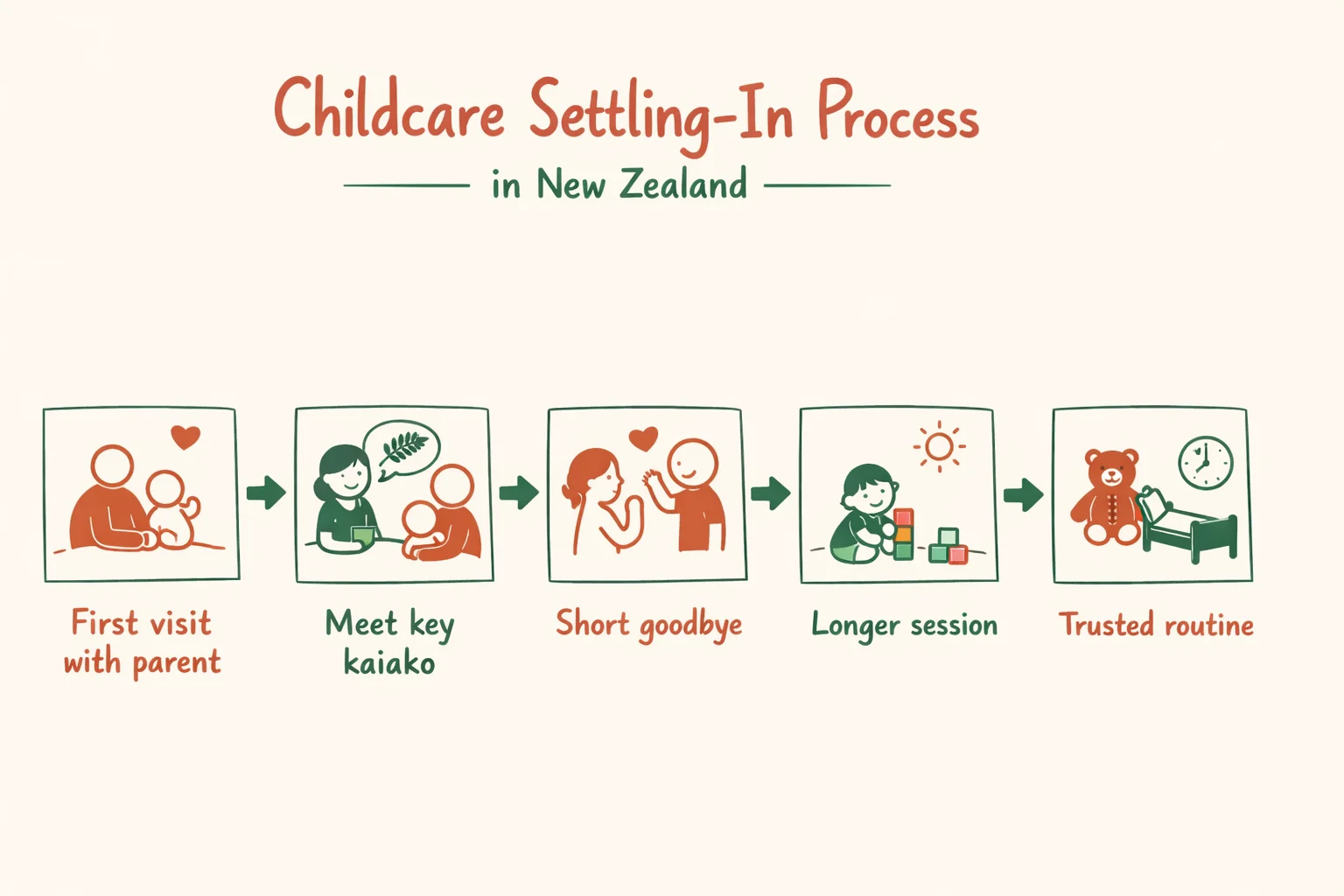
Settling-in is the gradual introduction your child has before they start regular childcare. Most NZ centres offer short visits with you present first, then brief separations, then longer sessions as your child builds trust with a key kaiako and learns the room routine.
Settling-in is not a test of your child
The first few days of childcare can feel strangely big. You know the centre is safe. You may even like the kaiako. Still, handing over your child and walking back to the car can make every rational part of your brain go quiet.
Settling-in exists for exactly that reason. It gives your child time to learn the room, the adults, the sounds, the smells, the kai routine, the sleep space, and the simple fact that you always come back. It also gives you time to see how the centre responds when your child needs comfort.
In New Zealand, the Ministry of Education tells parents that starting early learning often includes several visits before the official start date, with short visits first and longer visits later. Centres vary in the exact timetable, but the principle should be the same: gradual entry, warm relationships, honest communication, and a pace that fits your tamaiti.
What NZ centres usually offer
There is no national rule that says every centre must run settling-in for three days, one week, or one month. That is frustrating if you want certainty, but it also means a good centre can adapt the plan to your child, your work dates, and your whānau situation.
A typical centre-based programme includes an enrolment meeting, a few short visits with you present, one or more brief separations, then a move into normal booked hours. Babies and toddlers often need a slower pace than older preschoolers. Children who are already used to grandparents, playgroups, or another centre may move faster.
| Settling support | What it looks like | Why it helps |
|---|---|---|
| Pre-start visits | You and your child spend 20 to 60 minutes in the room before the official start date. | The room becomes familiar before your child is expected to stay. |
| Key kaiako or primary caregiver | One teacher becomes your main handover person and comfort adult. | Your child knows who to look for when you leave. |
| Routine sharing | You explain sleep, kai, toileting, comfort items, allergies, and words your child uses at home. | The centre can care for your child in a way that feels recognisable. |
| Short separations | You leave for 10 to 30 minutes once your child has connected with a teacher. | Your child practises saying goodbye and seeing you return. |
| Daily updates | Kaiako tell you how long settling took, what helped, and what to try tomorrow. | You can adjust the plan using facts, not guilt. |
Ask what the centre normally offers, then ask how they change it for children who need more time.
No one timetable fits every child
A practical week-by-week plan
Use this as a starting point, not a contract. Your centre may use different visit lengths, especially if your child is under two, starting full-time care, or joining during a busy period. The useful question is not, "Are we following the perfect schedule?" It is, "Is my child building trust and recovering faster each time?"
Week 1: visits with you present
The first visits are mostly about watching and joining in lightly. You might stay for 30 minutes, then 45 minutes, then an hour. Let your child explore while you stay available. If they sit on your lap the whole time, that is still information. They are learning from safety, not failing to be brave.
- Arrive at a calm time of day if the centre can offer it.
- Introduce your child to the same kaiako each visit.
- Show the kaiako your child's comfort item, sleep cues, and words for help, toilet, bottle, or dummy.
- Let the kaiako interact while you stay close enough to be a secure base.
- Leave before everyone is exhausted. A good short visit is better than a heroic long one.
Week 2: short separations
Once your child has had a few positive visits, the centre may suggest a short separation. Keep it clean. Tell your child you are going, say when you will return in a concrete way, hand over to the kaiako, and leave. Sneaking away can work for five minutes, but it often damages trust for the next goodbye.
A first separation might be ten minutes. Then thirty. Then a short session that includes morning tea or outside play. The centre should tell you what happened after you left: whether your child accepted comfort, what activity helped, whether they ate, and whether they returned to distress or stayed engaged.
Week 3: longer sessions and real routines
By the third week, many children are ready to practise the normal rhythm: arrival, play, kai, nappies or toileting, rest time, outside time, and pick-up. Some children will still cry at goodbye. That is not automatically a problem if they recover with support and have settled periods during the day.
If your work return date is fixed, try to start settling before your first day back. Even a small buffer helps. It is hard to be patient with a toddler's transition when your manager is expecting you online at 8:30am and you are sitting in the car crying into a takeaway coffee.
Why the key kaiako relationship matters
Many NZ centres use a primary caregiver, key teacher, or allocated kaiako model, especially for babies and toddlers. The name changes, but the idea is simple: your child should not have to seek comfort from a rotating crowd of adults. One familiar person becomes the bridge between home and centre.
This sits naturally with Te Whāriki, New Zealand's early childhood curriculum, which places wellbeing, belonging, relationships, and whānau partnership at the centre of learning. In plain parent language: children settle better when they feel known.
- Your child knows who will meet them at the door.
- You know who to tell about sleep, medication, allergies, family changes, or rough mornings.
- The kaiako can notice patterns, such as which activity calms your child or which handover time is hardest.
- Learning stories and updates become more personal because one teacher has watched the transition closely.
Ask for the handover person by name
Your role: supportive, not hovering
Parents often swing between two extremes. One parent wants to disappear quickly because goodbyes feel awful. Another stays so long that the child never gets to practise trusting the kaiako. The middle path is better: present at first, clear at goodbye, and willing to let the teacher step in.
During visits, try not to entertain your child the whole time. Sit nearby, name what is happening, and let the kaiako lead small moments: showing the playdough, finding a book, washing hands, offering a cup of water. Those tiny bridges matter.
- Use the same goodbye words each time.
- Tell the truth about leaving and coming back.
- Do not sneak out while your child is distracted.
- Do not promise there will be no tears tomorrow. You cannot control that.
- Do ask for a factual update after the first few solo visits.
- Do keep mornings boring, predictable, and early enough to avoid rushing.
Questions to ask before you enrol
Ask about settling before you sign, not after the first difficult morning. You are not being precious. You are checking whether the centre treats transitions as part of education and care, or as an inconvenience to get through.
- How many settling visits do you usually offer before the official start date?
- Can a parent stay for the first visits, and when do you usually suggest short separations?
- Who will be my child's key kaiako or main handover person?
- How do you comfort children who cry after drop-off?
- What will you tell me after the first solo sessions?
- Can we adjust the plan if my child needs more time?
- How do you handle sleep, food, bottles, toileting, medication, allergies, and comfort items?
- What happens if my child is still very upset after two or three weeks?
A strong answer will be specific. You want to hear about named kaiako, gradual visits, parent communication, routines, and flexibility. A weak answer sounds rushed: "They all get used to it eventually." Some do, but your child deserves more than a shrug.
The paperwork is part of settling too
Settling-in is emotional, but it is also practical. Licensed ECE services have health and safety responsibilities that affect your child's first days. They need current enrolment details, parent and emergency contacts, authorised pick-up information, and enough care information to keep your child safe.
Before care starts, make sure the centre knows about allergies, medication, medical conditions, sleep routines, food needs, toileting, cultural practices, custody or pick-up restrictions, and anything currently happening at home that could affect your child. You do not need to overshare your life. You do need to share what helps kaiako care well.
Do the boring forms properly
Signs the settling plan is working
Settling is rarely a straight line. A child can have a beautiful Tuesday and a disastrous Wednesday. Look for the trend rather than one dramatic morning.
- Your child accepts comfort from at least one kaiako, even if they still prefer you.
- The crying becomes shorter or less intense over time.
- Your child begins to explore one part of the room, toy shelf, sandpit, book corner, or outdoor area.
- They eat, drink, sleep, or rest at least some of the time.
- Kaiako can tell you specific details about what helped today.
- Your child is tired after care but not constantly panicked before every session.
If you want to compare centres before committing, use The Parent Circle's search and compare tools to shortlist providers near home or work. Then ask each one how they handle settling, not just whether they have a vacancy.
When settling is not improving
Some children need longer. That is not a character flaw. It may be temperament, age, limited previous separation, a recent family change, illness, poor sleep, or a mismatch between the plan and the child. The right response is to review, not blame.
Ask for a meeting with the centre if your child remains highly distressed for long periods, refuses food or sleep for days, becomes very withdrawn, has new toileting regression, or talks about being scared of a person or place. Bring facts: dates, patterns, what the centre has tried, and what helps at home.
| Problem | Possible adjustment |
|---|---|
| Crying escalates at the doorway | Arrive earlier or later, and have the key kaiako meet you outside or at a quieter spot. |
| Child does not engage after you leave | Return to shorter sessions and build around one familiar activity. |
| Sleep is falling apart | Share home sleep cues and ask how the centre settles children for rest. |
| Parent anxiety is driving long goodbyes | Agree on a one-minute goodbye and a centre update after 30 minutes. |
| The plan feels rigid | Ask for a revised settling plan with clear daily goals and review points. |
If the centre dismisses your concerns, refuses to communicate, or cannot explain how they comfort distressed children, that is useful information. You may need a different room plan, different hours, or a different provider. Trust your observations, but give the relationship a fair chance to form first.
Useful NZ sources
For official parent guidance, start with the Ministry of Education's page on enrolling and starting your child in early learning. For curriculum context, read Te Whāriki. If you want to check a centre's quality history, search its latest report on ERO.
The Ministry's centre-based licensing criteria also cover health and safety practices such as emergency planning, communication, medication, sleep, and child records. You do not need to memorise the regulations. You do need to choose a centre that can explain how those responsibilities show up in daily care.
FAQ: childcare settling-in in NZ
How long does childcare settling-in usually take?
Many children need one to three weeks to feel more settled, but there is no fixed rule. Some older preschoolers settle after a few visits, while babies, toddlers, and children with little previous separation may need a slower plan.
Can parents stay during settling visits?
Many NZ centres allow parents to stay for early visits, then gradually introduce short separations. Ask the centre's policy before enrolment, because visit numbers and parent-stay expectations vary.
Is crying during settling normal?
Yes, some crying is normal, especially at goodbye. The important sign is whether your child accepts comfort, has settled periods, and improves over time. Distress that stays intense all day needs a review with the centre.
What should I bring to settling visits?
Bring any enrolment paperwork, a comfort item if the centre allows it, nappies or spare clothes if needed, and clear notes about sleep, kai, toileting, allergies, medication, and words your child uses at home.
What is a primary caregiver or key teacher?
It is the kaiako who becomes your child's main relationship person during the transition. They usually handle handovers, comfort, routine learning, and parent communication so your child has one familiar adult to trust.
What if my child is not settling after a few weeks?
Ask for a meeting and a revised plan. Look at timing, session length, handover routine, key kaiako relationship, sleep, food, and any recent changes at home. If the centre is dismissive or vague, consider whether it is the right fit.
Settling-in is a transition for the whole whānau. Your child is learning, but so are you: how the centre communicates, how kaiako respond under pressure, and whether this place feels safe enough for trust to grow. Take it seriously. Keep it calm. And give everyone a little more grace than the first hard morning seems to allow.
Find a centre that supports a gentle start
Search 4,394+ licensed ECE providers across New Zealand and compare centres before you enrol.
Search Childcare Near YouRelated guides
Childcare for Every Family: Special Circumstances
A practical NZ guide to finding childcare around additional needs, shift work, single parenting, siblings and family change.
Understanding Te Whāriki: How NZ's National Curriculum Shapes Every ECE Centre
A parent's guide to Te Whāriki, New Zealand's early childhood curriculum, and how its principles and strands shape daily learning at ECE.
Your Child's First Illness from Daycare: What NZ Parents Need to Know
A calm NZ guide to the first daycare illness season: what is normal, when children need to stay home, when to call Healthline, and how working parents can plan for sick days.
What to Pack for Daycare: The Complete Checklist for NZ Parents
A practical NZ daycare bag checklist covering spare clothes, nappies, bottles, lunchboxes, sun hats, comfort items, medication, labels, and what to leave at home.
Find childcare near you
Search and compare providers by suburb, care type, cost, and availability.