
Resource Hub
Your Child's First Illness from Daycare: What NZ Parents Need to Know
Published · Last updated · 8 min read
Contents
Is it normal for my child to get sick after starting daycare?
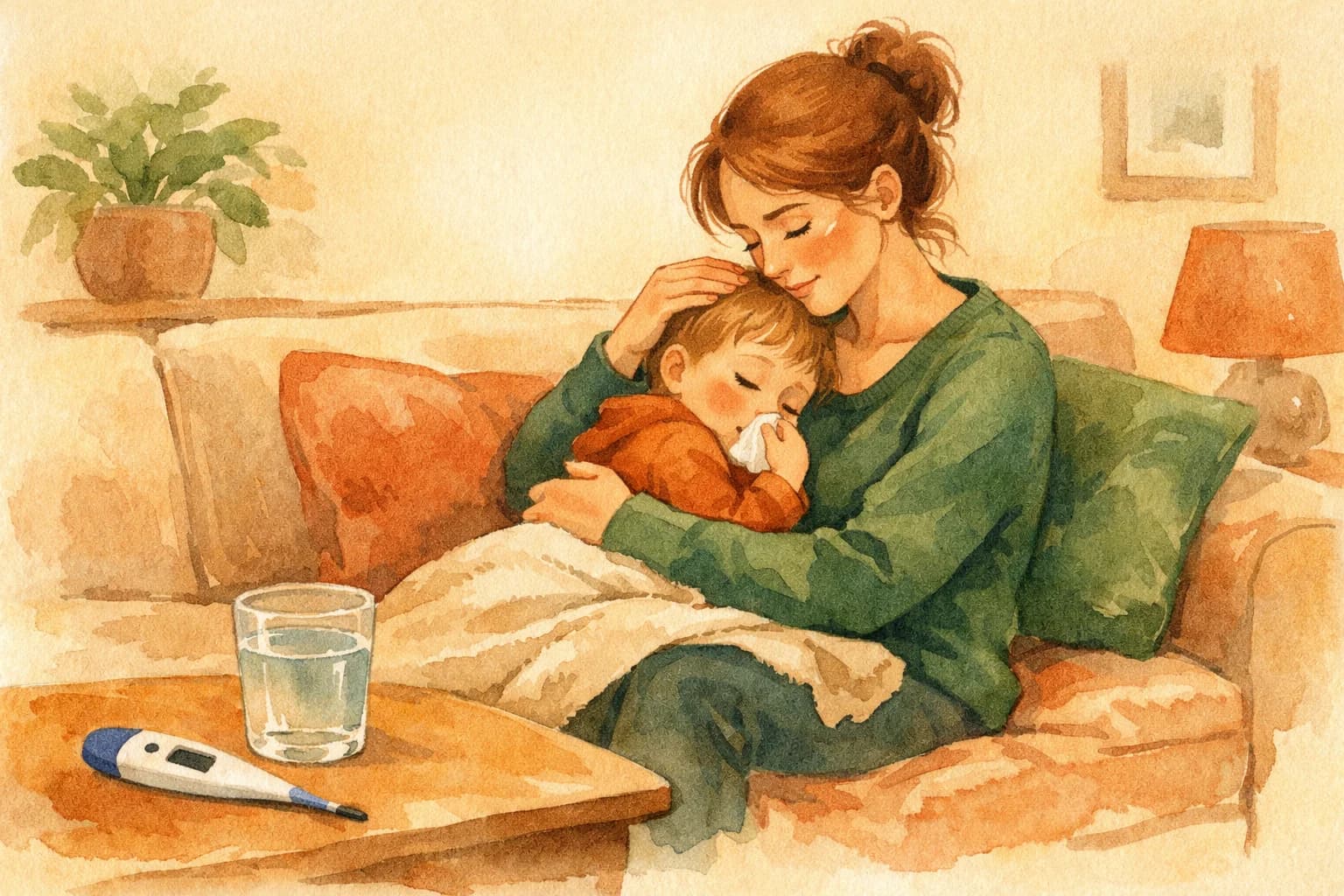
Yes. Many tamariki get more coughs, colds, tummy bugs and rashes in the first months of childcare because they are suddenly sharing rooms, toys and germs with a bigger group. The practical rule is simple: keep them home when they are unwell, follow your centre's illness policy, and call Healthline on 0800 611 116 or your GP if you are worried.
The first bug is stressful, even when it is normal
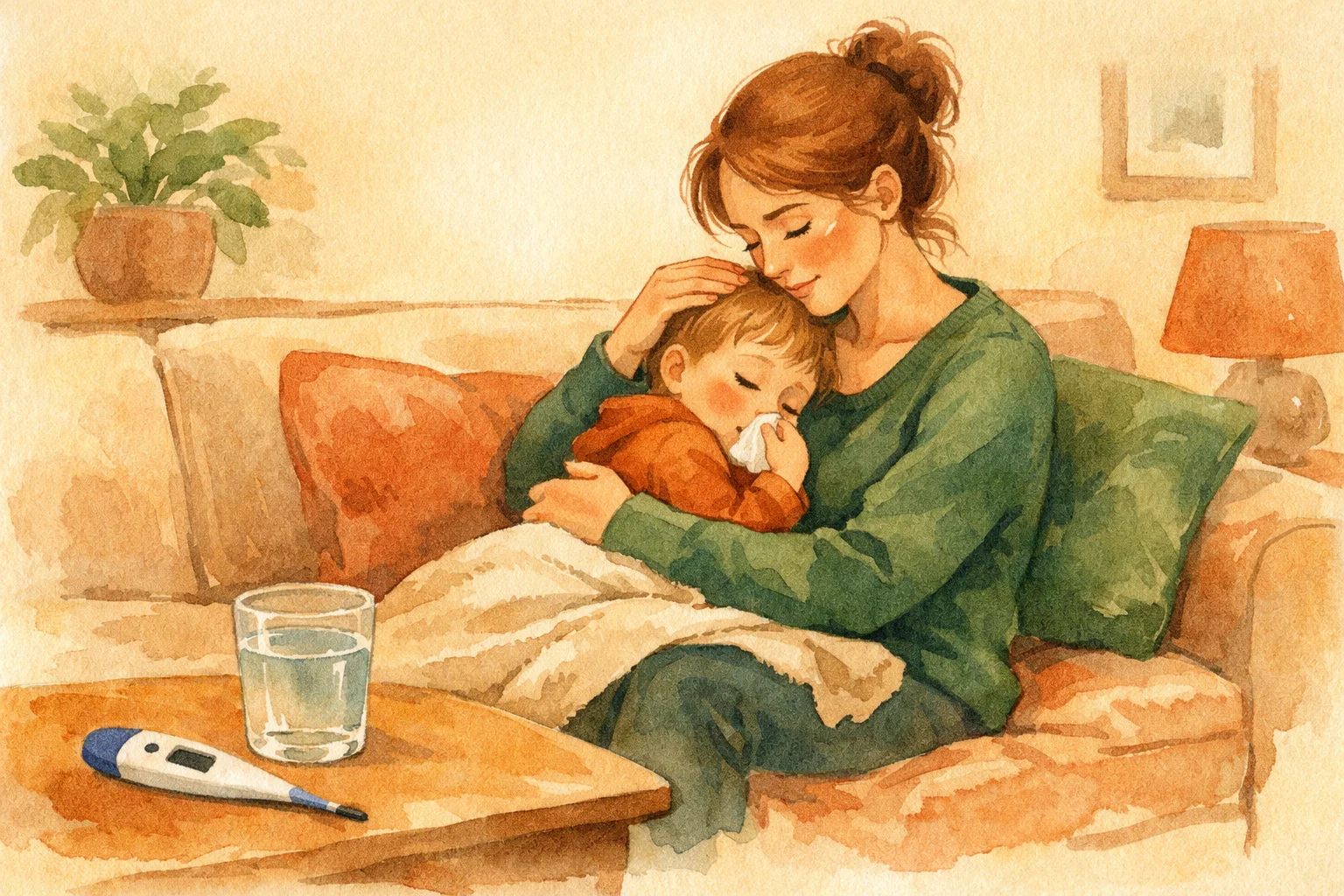
The first illness from daycare usually arrives at the worst possible time: your child has only just started settling, you are trying to return to work, and suddenly there is a runny nose, a fever, or a message from the centre asking you to collect them.
This does not mean you chose the wrong centre. It also does not mean your child has a weak immune system. Childcare brings close contact with more children, shared surfaces, shared toys, nappies, meals, sleep rooms and plenty of little hands that are still learning how hygiene works.
The goal is not to panic or to send a miserable child back too soon. The goal is to know what is normal, what needs medical advice, and how to make a sick-day plan before the next bug turns the week upside down.
Medical note
Why children get sick more often after starting childcare
Young children are still meeting ordinary viruses and bacteria for the first time. A home routine might expose them to a small circle of whānau and friends. An ECE room exposes them to many more children, adults and households in one week.
- Children play close together and often touch their faces, mouths and noses.
- Toys, tables, books, dress-ups and outdoor equipment are shared across the day.
- Nappy changes, toileting, meal times and sleep routines create more chances for bugs to spread if hygiene slips.
- Toddlers cannot reliably cover coughs, blow noses, wash hands well, or explain early symptoms.
For most children, this early illness patch eases with time. They still get sick, of course, but the back-to-back pattern usually becomes less intense as they grow, build immune memory and learn better hygiene habits.
The daycare illnesses NZ parents usually meet first
Every centre will have its own pattern, but the same few illnesses come up again and again in early learning settings. Knowing the rough shape of each one helps you make calmer decisions when the centre calls.
Colds are the repeat offenders. A child can look fairly cheerful with a runny nose one day, then wake up coughing and clingy the next. Centres are not usually expecting children to stay home for every clear runny nose, but they are right to send children home when symptoms affect breathing, comfort, energy, sleep, eating, or safe participation.
Gastro is different because it spreads fast and hits whole rooms. One child vomiting in the morning can become six families juggling laundry, buckets and work calls by the next day. This is why the 48-hour rule feels strict, but it is there for a reason.
| Illness | What parents often notice | Usual childcare issue |
|---|---|---|
| Colds and coughs | Runny nose, mild cough, tiredness, sometimes fever | Stay home if feverish, miserable, breathing is hard, or they cannot join normal activities |
| Gastro bugs | Vomiting, diarrhoea, tummy pain, poor appetite | Health New Zealand ECE guidance says return only 48 hours after vomiting or diarrhoea has stopped |
| Hand, foot and mouth | Fever, mouth ulcers, spots or blisters on hands, feet or bottom | Often spreads quickly. Return depends on symptoms, centre policy and whether the child is well enough |
| Croup | Barking cough, hoarse voice, noisy breathing, often worse at night | Breathing difficulty needs urgent advice. Do not wait if your child is struggling |
| Conjunctivitis | Red, sticky or sore eyes | Some centres exclude while discharge is active or the child is too uncomfortable |
| Impetigo or school sores | Crusty sores, often around nose, mouth or limbs | Needs treatment and covered sores before return, based on centre policy and health advice |
This table is a parent-friendly guide. Always follow your centre's policy and medical advice for your child's situation.
When your child needs to stay home
NZ early learning services are expected to take reasonable precautions to prevent infection spreading. The HealthEd illness guidelines for ECE services, effective from 20 April 2026, say an unwell child or staff member should not be attending ECE. If they become unwell at the centre, they should be isolated from other children and arranged to go home as soon as possible.
The same HealthEd guidance says children or staff who have had vomiting or diarrhoea should not return until 48 hours after all symptoms have stopped. The Ministry of Education infectious diseases schedule gives exclusion guidance for specific infectious illnesses.
A centre policy may be stricter than your instinct on a tired morning. That can be frustrating, but it is also part of how the centre protects babies, pregnant staff, immunocompromised whānau and children who pick up every infection going around.
Ask for the policy before enrolment and keep it somewhere easy to find. The useful details are usually practical: who decides if a child is unwell, how quickly parents must collect, whether a GP note is needed, what happens after vomiting or diarrhoea, and how the centre tells families about outbreaks.
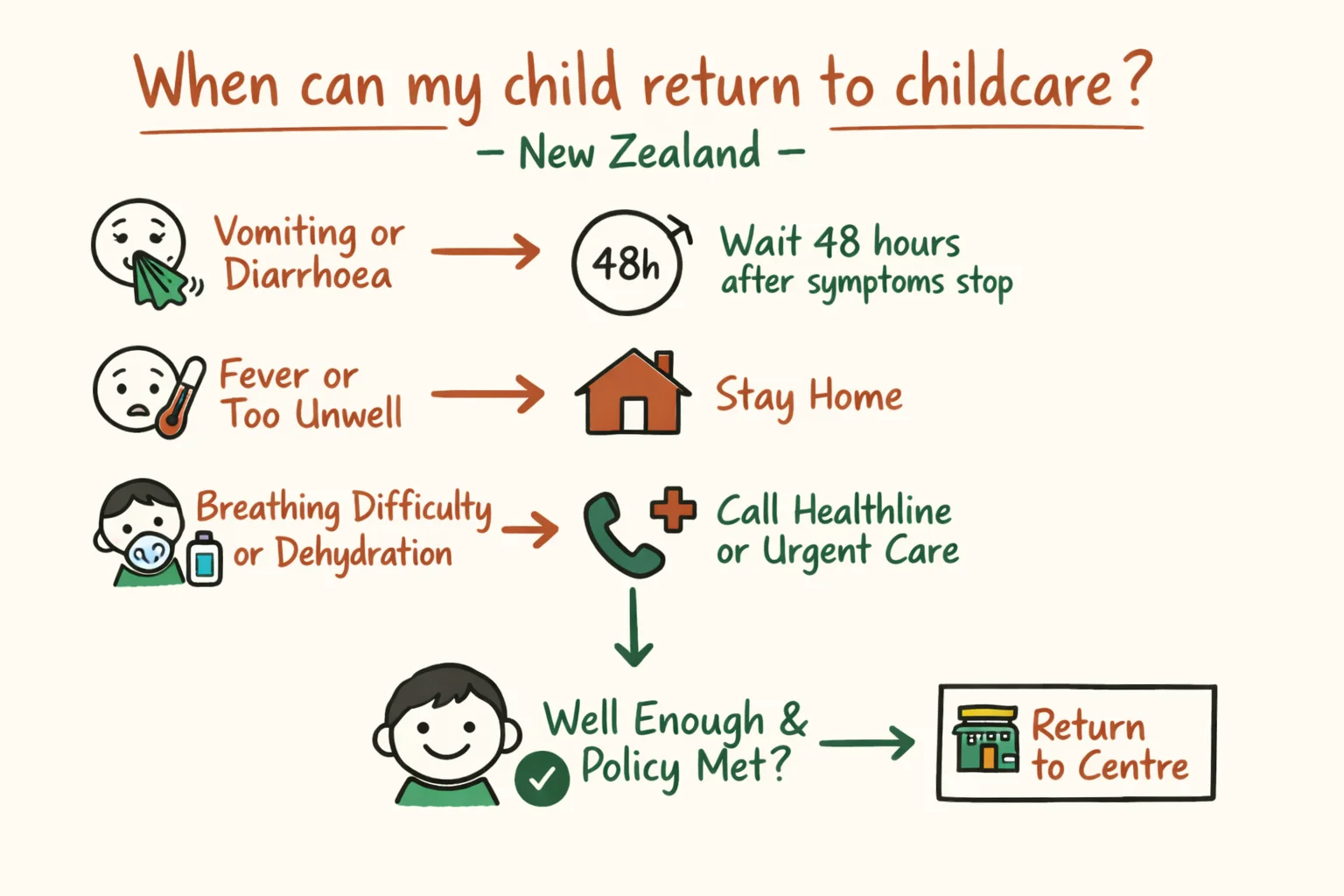
- Keep them home if they have vomiting or diarrhoea. Wait 48 hours after symptoms stop before returning.
- Keep them home if they are too unwell to join normal play, meals and rest at the centre.
- Keep them home if they have a fever and are miserable, drowsy, in pain, not drinking well, or clearly not themselves.
- Check the centre policy for rashes, eye discharge, hand foot and mouth, chickenpox, impetigo and other infectious illnesses.
- If the centre asks for medical clearance, sort that before drop-off rather than arguing at the door.
The return-to-care test
Build your sick-day plan before the next bug
The first daycare illness is hard because it catches everyone by surprise. The second one is easier if you have already decided who can stay home, who can work flexibly, and what your centre expects before return.
Managing sick days when you work
This is the bit parents often underestimate. The illness itself might be mild, but the logistics can be brutal if both adults are working and the centre correctly says no return yet.
Employment New Zealand says eligible employees are entitled to 10 days of paid sick leave each year, and this can be used to care for a sick child or other dependant. You can usually carry over unused sick leave up to 20 days. Tell your employer as soon as possible if you need to take sick leave.
You can also ask for flexible working arrangements. Employment New Zealand says employees have the right to ask to change work arrangements, including place, hours or days. Employers must consider the request and can only turn it down for valid reasons.
If you are returning from parental leave, assume the first two months may be messy. Avoid scheduling major work travel or presentations in the same week your child starts care if you have any choice. That is not pessimism. It is logistics.
Single parents and shift workers need a more deliberate plan. Talk to the centre about emergency contacts, late collection rules, and how quickly they expect a sick child to be picked up. If your backup person works too, decide in advance who has authority to collect and who can stay with your child once they are home.
- Talk to your employer before illness hits, not during the 7:15am panic.
- If two adults work, decide who covers which days or half-days when possible.
- Avoid sending a contagious child to vulnerable grandparents just to solve a work problem.
- Ask your centre how early they notify parents about outbreaks, especially gastro and hand foot and mouth.
- Keep one or two low-effort work tasks ready for days when you are home with a recovering child but cannot do deep work.
What good centres do to reduce spread
No centre can prevent every bug. Be suspicious of anyone who implies they can. What a good centre can do is lower risk through boring, consistent routines: handwashing, cleaning, safe nappy changes, food hygiene, ventilation, clear illness policies and quick communication.
- Children wash hands before eating and after toileting or nappy changes.
- Kaiako help with nose wiping, handwashing and safe coughing routines without shaming children.
- Nappy changing areas are separate from food preparation areas.
- Toys and high-touch surfaces are cleaned regularly, especially during outbreaks.
- The centre tells families quickly when a contagious illness is circulating.
- Staff follow the same stay-home expectations when they are unwell.
When you are comparing centres on The Parent Circle, ask to see the illness policy as well as the menu and sleep room. A clear policy protects your child, the other tamariki, kaiako and every working parent who is trying to keep life moving.
Good communication is as important as clean surfaces. Parents should know when gastro, hand foot and mouth, chickenpox or other infectious illnesses are circulating. That heads-up lets families watch symptoms and plan work coverage before the phone rings.
When to call Healthline, your GP or urgent care
Parents do not need to diagnose every rash or cough. That is what health services are for. Healthline is free on 0800 611 116 and is available any time of day or night for advice from nurses and paramedics.
- Call for advice if your baby is under 3 months and has a fever.
- Get urgent help for breathing difficulty, noisy breathing, blue lips, unusual drowsiness, a child who is hard to wake, or signs of dehydration.
- Call if vomiting or diarrhoea is persistent, there are fewer wet nappies, your child is not drinking, or you see blood in vomit or poo.
- Ask for advice about a rash with fever, a rash that does not fade when pressed, or any rash that worries you.
- Trust your gut. If your child seems seriously unlike themselves, get help.
Does daycare illness build immunity?
There is a grain of truth here, but it gets overused. Exposure helps the immune system recognise ordinary infections over time, which is one reason the first stretch of childcare can feel worse than later months. That does not make every infection useful, and it does not mean children should be exposed on purpose.
The better framing is this: normal childhood infections are common in group care, but prevention still matters. Immunisations, staying home when unwell, hand hygiene, cleaning and sensible exclusion periods reduce spread and protect children who are more vulnerable.
If your child is not recovering between illnesses, is losing weight, has repeated serious infections, or your gut says the pattern is beyond normal childcare bugs, talk to your GP. The ordinary first-year childcare cycle should still include stretches where your child is eating, playing, sleeping and growing like themselves.
FAQ: first daycare illness
How often will my child get sick after starting daycare?
Some children get several mild illnesses in the first few months, especially colds and tummy bugs. The pattern usually improves with time, but every child and centre is different.
Can my child go to daycare with a runny nose?
A mild runny nose on its own may be accepted by some centres, but keep your child home if they have a fever, are miserable, have breathing difficulty, are too tired to participate, or the centre policy says they should stay home.
What is the 48-hour rule for daycare in NZ?
HealthEd's ECE illness guidance says children or staff who have been vomiting or had diarrhoea should not return to ECE until 48 hours after all symptoms have stopped.
Should I change centres if my child keeps getting sick?
Not automatically. Frequent minor illness is common after starting group care. Do ask about hygiene, cleaning, ventilation, illness communication and whether sick children are being sent home consistently.
Can I use sick leave for my child?
Employment New Zealand says eligible employees can use paid sick leave to care for their partner, children or other dependants, as well as for themselves.
Who should I call if I am unsure whether symptoms are serious?
Call Healthline free on 0800 611 116, contact your GP, or seek urgent care if symptoms are severe. Healthline is available day and night.
Your child's first daycare illness is not a parenting failure. It is one of those unglamorous parts of starting childcare that nobody can fully avoid. Choose a centre with clear hygiene and illness practices, make a realistic sick-day plan, and use The Parent Circle to compare providers that communicate well with whānau.
Find a centre that communicates clearly
Search 4,394+ licensed ECE providers across NZ and compare centres before your family starts childcare.
Search childcare near youRelated guides
Childcare for Every Family: Special Circumstances
A practical NZ guide to finding childcare around additional needs, shift work, single parenting, siblings and family change.
What to Pack for Daycare: The Complete Checklist for NZ Parents
A practical NZ daycare bag checklist covering spare clothes, nappies, bottles, lunchboxes, sun hats, comfort items, medication, labels, and what to leave at home.
Returning to Work After Parental Leave: Managing the Childcare Transition
A practical NZ guide to timing childcare, flexible work, breastfeeding, sick days, and the emotional jump back into work after parental leave.
The Childcare Settling-In Process: What NZ Centres Offer and What to Expect
A practical NZ guide to settling visits, key kaiako relationships, week-by-week transitions, and questions to ask before your child starts childcare.
Find childcare near you
Search and compare providers by suburb, care type, cost, and availability.