
Resource Hub
Single Parent Childcare: Support, Subsidies, and Strategies for Solo Parents in NZ
Published · Last updated · 8 min read

How can a single parent make childcare work in New Zealand?
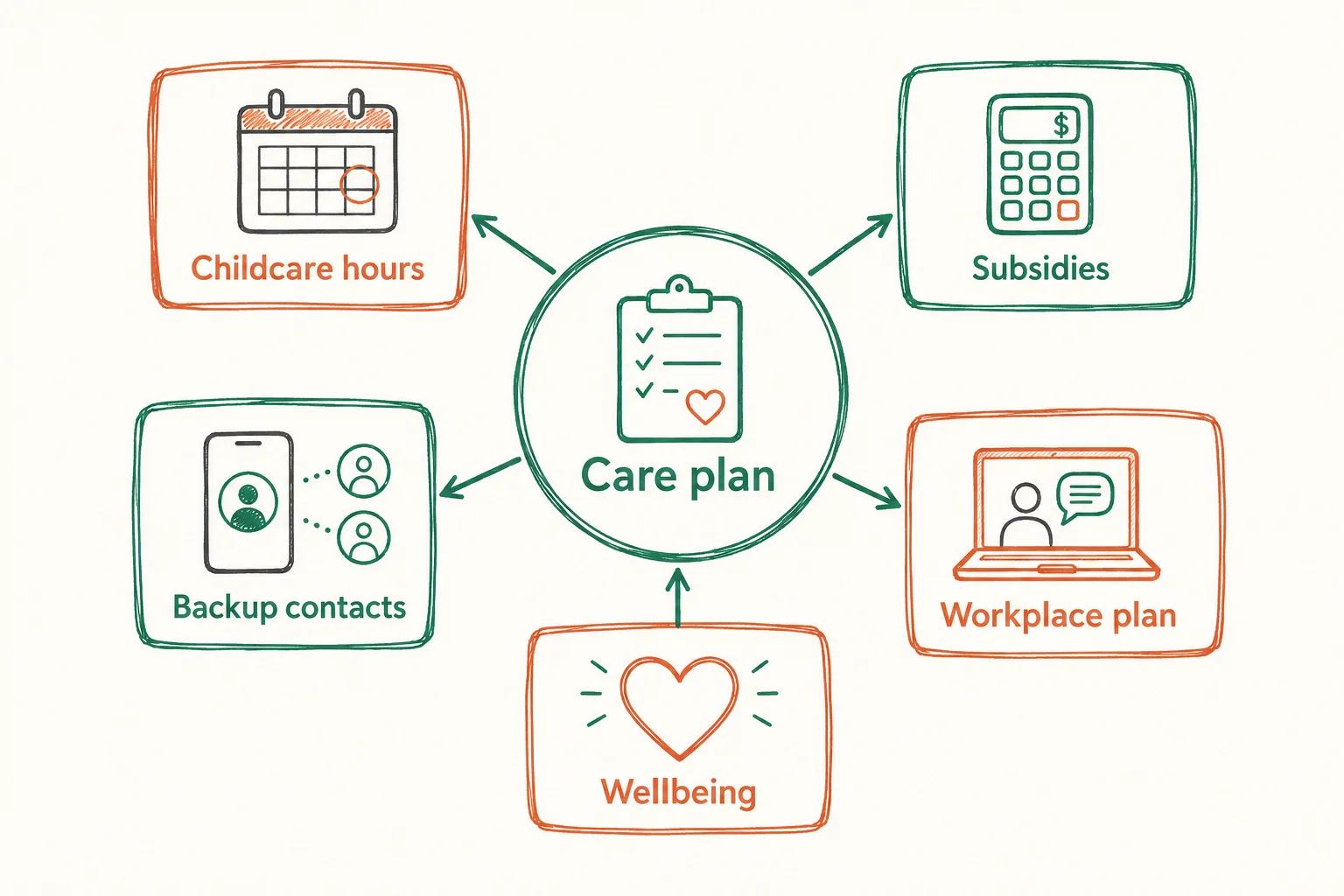
Start with the hours you genuinely need, then check 20 Hours ECE, the Work and Income Childcare Subsidy and FamilyBoost before signing a fee agreement. A second plan matters just as much: name the people who can collect your child, tell the centre who they are, and agree on what happens when work or illness disrupts the week.
Start with a plan that survives a normal week
Solo parenting can make a childcare timetable feel like a fragile bit of engineering. One late meeting, a child with a fever, or a delayed train can put pressure on the whole day. The answer is not a perfect roster. It is a plan with enough slack that one bad morning does not become a crisis.
Before you compare centres, write down your actual drop-off and pickup windows, commute time, work shifts, school holidays and the days you are most likely to need cover. Then ask providers about late-pickup rules, casual days, holidays, minimum booked hours and how they contact you if your child is unwell. Searching nearby licensed providers is a useful starting point, but a visit is where you find out whether the routine will work for your whānau.
Different kinds of care solve different problems. A centre may give you regular long-day hours and a stable peer group. Home-based care can feel smaller and may suit a variable timetable. A nanny or family member can help with awkward starts and finishes, but has a different cost and employment arrangement. There is no prize for choosing the most fashionable option. Choose the arrangement you can maintain on an ordinary Tuesday.
Video
Check every payment you may be able to use
Do the funding check before you decide a centre is out of reach. The amount a family pays can change after support is applied, and the rules are detailed enough that a rough guess is rarely useful. Ask the provider for its current fee schedule and invoice format, then use the official eligibility tools or speak with Work and Income and Inland Revenue about your own circumstances.
Keep the paperwork in one place. You may need enrolment details, invoices, proof of income or changes in care, and it is much less stressful to find them before a deadline. If your income, work hours, address or care arrangements change, tell the relevant agency promptly. Waiting until a payment looks wrong can leave you with a harder problem to untangle.
| Support | Who it may help | What to check |
|---|---|---|
| 20 Hours ECE | Children aged 3, 4 or 5 at a participating service | Up to 6 hours a day and 20 hours a week. Fees cannot be charged for claimed 20 Hours ECE hours, although hours outside the allowance and optional charges may still cost money. |
| Childcare Subsidy | Families using approved childcare who meet Work and Income criteria | It is income tested and depends on the number of children. At 1 April 2026, the maximum rate is $6.72 per hour per child. |
| FamilyBoost | Eligible tax-resident caregivers paying a licensed ECE provider for a child aged 5 or under | Household income, care arrangements and invoices matter. Separated caregivers can each claim only where they have regular day-to-day care, costs and separate invoices. |
| Sole Parent Support and other Work and Income help | Parents who meet the benefit and extra-help rules | Tell Work and Income about changes to income, work, care and childcare costs. Benefit obligations still apply. |
Use current figures
Sole Parent Support can come with work, preparation and social obligations. Work and Income says parents whose youngest child is aged 3 to 13 may need to look for part-time work, while those with a youngest child under 3 generally have work-preparation obligations. The exact expectation can depend on your circumstances. If childcare availability is the barrier, explain that early rather than missing an appointment or letting a requirement drift.
Use 20 Hours ECE deliberately
For eligible children, 20 Hours ECE can cover up to 20 hours a week, with no more than 6 hours in a day. You choose how those hours are allocated in the enrolment agreement. If your child attends more than 20 hours, ask the provider to show which hours are covered and which hours you will pay for. The Ministry of Education says a family can receive a mix of 20 Hours ECE and the Childcare Subsidy when the subsidy covers more than 20 hours.
That matters for solo parents because a five-day schedule may be practical even when a shorter enrolment looks cheaper on paper. A centre that fits your workday can reduce the risk of late fees, rushed handovers and last-minute favours. Compare the after-support cost against the reliability you gain, not only the headline weekly fee.
A provider should be able to explain its charges in plain language. Ask about registration fees, deposits, meals, nappies, late pickups, public holidays and the notice period for changing booked days. If your child is moving between services, remember that the 20 Hours ECE limit applies across services, not separately at each one. Put the agreed allocation in writing and review it if the routine changes.
Build a backup plan before you need it
Every centre has an illness policy and every child eventually tests it. Make a short list of people who are genuinely able to help: a co-parent, grandparent, sibling, friend, neighbour or another parent you trust. Ask each person what kind of help they can offer. Some can collect from a centre. Some can sit with a sick child. Some can only be an emergency phone call. Clear limits are kinder than vague promises.
- Give the centre an up-to-date authorised-collector list and agree on a password or verification process if it uses one.
- Keep a small sickness kit, medicines where appropriate, comfort items and your child's health information ready for a quick handover.
- Save your centre's late-pickup and illness policy in your phone, along with the number for your backup contacts.
- Check whether work, school and childcare calendars clash before each term begins.
If the other parent is involved, keep the centre out of adult conflict. Give staff accurate collection permissions and contact details, provide any relevant court order or written arrangement, and decide who receives invoices and updates. Staff need a clear, lawful instruction rather than a story they have to interpret. A calm, written record protects your child and makes handovers easier for kaiako.
Have the workplace conversation early
New Zealand employees can request flexible working arrangements, including changes to hours, days or place of work. An employer must consider the request in good faith and reply in writing within one month, although it can decline for recognised business reasons. A useful request is specific: for example, a slightly earlier finish for collection, a fixed work-from-home day, or a temporary change while a child settles into care.
Eligible employees have 10 days of paid sick leave each year and can use it to care for a child or other dependant. That does not solve every childcare closure, but it is worth knowing what you have before a hard week. Check your employment agreement too. Some workplaces offer extra family leave, carer's leave or practical flexibility beyond the legal minimum.
Keep the conversation focused on a solution. You might propose core hours that cover team meetings, a predictable early finish on collection days, a swap in start and finish times, or a short trial. Explain how clients, handovers and urgent work will still be covered. Employers do not have to agree to every request, but a practical proposal gives them something real to consider.
Let your support network be practical
Support is easier to accept when the ask is concrete. Instead of saying you are overwhelmed, ask a friend if they can be your Wednesday emergency pickup contact. Ask a relative to cook one meal during a busy week. Join a local playgroup, school or parent group and give the relationship time to become reciprocal. You are not looking for a superhero. You are building a few dependable connections.
If money is the immediate pressure point, free and confidential budgeting support is available through MoneyTalks. If your stress is becoming hard to carry, 1737 offers free call or text support in New Zealand. These services are not a substitute for professional advice about your benefit or legal position, but they are a reasonable place to start when you need someone to help sort the next step.
Choose a centre that communicates well
For a solo parent, ordinary communication can be a deciding factor. During a visit, notice whether staff can explain the daily routine, how they record sleep and meals, and who will call if something changes. Ask whether updates go to more than one authorised caregiver, how urgent decisions are handled and whether there is a consistent key teacher. A polished room matters less than a team that gives you useful information and follows through.
Trust your practical instincts. If a pickup window is too tight, if the staff seem vague about illness procedures, or if you feel uncomfortable asking a basic question, that is information. You do not need a perfect centre. You do need one that treats you as a partner, knows your child and can work with the realities of your week.
Review the plan after the first month
The first arrangement is allowed to need adjustment. After four to six weeks, look at what actually happened: which days ran late, how your child settled, whether the invoice matched your expectation and which backup arrangements were useful. A small change to booked hours or a clearer handover routine can make more difference than starting the whole search again. Keep the parts that work and fix one pressure point at a time.
Questions solo parents often ask
Can a single parent get help with childcare costs in NZ?
Possibly. Depending on your circumstances, 20 Hours ECE, the Work and Income Childcare Subsidy, FamilyBoost and other Work and Income assistance may reduce the cost. Check each programme separately because income, childcare type, child age and care arrangements matter.
How much is the Childcare Subsidy?
At 1 April 2026, the maximum Childcare Subsidy rate is $6.72 an hour per child. The actual rate depends on gross weekly income and number of children, and the rate table is updated over time.
Can I use FamilyBoost if I am separated from my child's other parent?
Inland Revenue says separated caregivers or caregivers in separate households can claim if they have regular day-to-day care, pay ECE costs and provide separate invoices. Only claim expenses that relate to your own care arrangement.
What happens if my child is sick and I have no one to call?
Tell your employer as soon as possible and check whether you can use sick leave to care for your child. Eligible employees have 10 paid sick days each year. Update your backup plan after the immediate problem is handled so the same gap is less stressful next time.
Can I ask my employer for hours that work around childcare?
Yes. Employees can request flexible working arrangements at any time. Make the request in writing, explain the arrangement you are seeking and suggest how work will still be covered. Your employer must consider it and reply in writing within one month.
The best childcare arrangement is not the one that looks most impressive to someone else. It is the one that lets your child feel secure and gives you a realistic way to keep the rest of life moving. When you are ready to compare options, use The Parent Circle's childcare search to shortlist providers, then take your plan and your questions to the visit.
Find care that fits your week
Compare licensed childcare providers across New Zealand and ask the questions that matter to your family.
Search for childcareRelated guides
Find childcare near you
Search and compare providers by suburb, care type, cost, and availability.